≡ Menu

Another look at the Roth IRA

I recently read Kay Bell’s article at Don’t Mess With Taxes titled Are you ready for a Roth conversion? I commented that most people would not be likely to save their way to a higher bracket at retirement and offered some numbers. For example, a couple  having a standard deduction of $11,400 + exemptions totaling $7300. First $18700/yr tax free. The 4% withdrawal rule (as good a starting number as any) means one needs $467,500 in pretax savings to generate that $18,700. This led to Kay inviting me to expand on this thought and in response I wrote an article titled Roth IRAs and your retirement income, now published there. Take a read and let Kay know if the article helped you.

Beware the Roth Mania.

Joe

{ 3 comments }

A Spring Ahead Roundup

It’s that time again, Daylight Saving Time started while we slept.

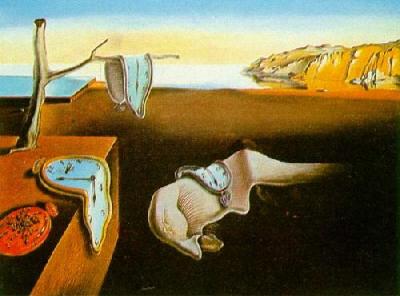
By the way, if you didn’t know, this Dali work is Persistence of Memory. If you refer to it correctly the first time and are asked again, it’s okay to say “you know, the melting clocks.”  Glad to get that out of the way. Now, on to my best of the week.

At Eliminate The Muda, FinEngr of Engineer Your Finances asks What’s your magic number? The (literally) million-dollar question. Everyone’s number is unique to them, but it seems we all start with trying to understand if we will spend more or less after retiring. Is a million enough? For some, yes, others, maybe not.

Next on Len Penzo’s site is a guest post, The (Dead)Beat Generation, a discussion of whether to walk away from your mortgage. I’m still on the fence about this, gathering up a survey of others’ views and trying to come to my own conclusion.

Meg Marco authored Consumerist’s 10 Commandments of Credit, which caught my eye both because I’m a list guy as well as the common sense it offers. Dave Ramsey be darned, I’ll take the advice here, “Thou Shalt Get A Credit Card With Extended Warranty Protection, Cash Back or Reward Points, And Thou Shalt Take Advantage Of Them.” This, and 9 more great credit tips.

Another recurring question, Is There Such a Thing as “Good Debt,” was asked at Fiscal Geek. In theory, debt is good if you can get a higher return than the interest you are paying. In the old days, a zero fee, zero interest credit card that let you borrow for a year was a great deal, to me, good debt. Short of that, I’d say being debt free is a worthy goal.

Last this week, I liked 7 Income Tax Breaks – Thanks to Your Children, by Miranda. As tax time approaches, this post is a great reminder of the tax breaks you can take advantage of if you have children. Take a look and see if you’re taking advantage of the tax breaks available to you.

Have a great week. Enjoy the extra daylight.

Joe

{ 7 comments }

Pushing Obamacare through

The Democrats are doing their best to get it through…..

{ 2 comments }

Farewell Aunt Sue

Last week, my aunt passed away, and I took a few days off to go the the wake and funeral. I grew up in a 4 family house (a small apartment building) and she and her family lived right above us. She lived to 89, and I had the honor of presenting a eulogy I wrote with the the help of my wife and daughter at the funeral service.

Today, I’d like to share it with my readers.

Aunt Sue often joked with me that I was the black sheep of the family.  So in order to keep my reputation I would first like to share with you the worst thing ever said to me about Aunt Sue.  “She wants everybody to love her.”  This truly was the worst thing that you could say and yet if everyone in the world felt as she did the world would be a far better place.  On the other hand, if no one felt this way it would be a world in which I wouldn’t want to live.  I know I moved away from Brooklyn a long time ago, 25 years, but during that time I spoke to Aunt Sue often enough that I felt I never left.
In every conversation she spoke of the love she had for her family, her children, her grandchildren, her great grand children.  She spoke about a mother’s love and how she would have trouble going to sleep before getting that phone call telling her that her daughter was home and safe.
I’m sorry that it took until the second half of my life to really understand some of this.  I wish that I had learned as a child what I learned these past decades that Aunt Sue was so full of love it wasn’t something that she could run out of.  She had enough for everyone who wanted to share it.
My family often sent cards and spoke to Aunt Sue on the phone to remind her how much she was loved and missed.  My daughter often asked why Aunt Sue wouldn’t come and live with us because we had plenty of room and air conditioning.  She came to understand that her home was where Aunt Sue was most comfortable and close to most of her family.  Aunt Sue and my wife enjoyed wonderful conversations and never a visit or call would pass without Aunt Sue imparting some words of wisdom and the always “I love you.”

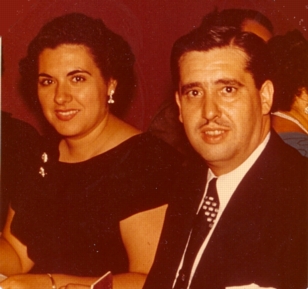
The above photo is over 44 years old as my Uncle Al passed away in 1966.

Joe

{ 5 comments }

Give Me Get Me Buy Me

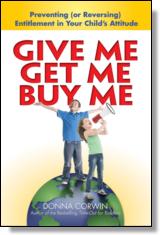
Give Me Get Me Buy Me is the title of Donna Corwin’s recent book. Subtitled Preventing or Reversing Entitlement in Your Child’s Attitude, it proved itself to be an interesting read. I’ll first offer the mandated FTC disclosure, I received a copy of the book in exchange for this review through the kind people at TLC book tours. I am the father of an 11 year old girl and when I read the description, I felt this book fit within my personal goals as well as the scope of my blog.
On one hand, this book is brief, 9 chapters over 180 pages in a trade paperback. On the other hand, the author wastes no time tackling the issue at hand, keeping the anecdotes short, as a way of illustrating a given scenario, and offering a path to solving the particular behavioral issue being addressed.

The first  chapter discusses the external pressures which begin innocently enough but result in our creating the sense of entitlement in our children. We want ‘the best’ for our children, don’t we? Once we get beyond the safety issues (yes, the stroller and crib need to be sturdy and safe) we move toward the designer realm and once the train has left that station, we don’t know how to stop. One only need to Google “designer diaper bags”  to understand this point. There is a combination of pressure from the media and from our peers to focus on possessions and to strive for bigger and better status symbols. Advertisers have made an art of convincing us that we need and in fact, deserve, the latest gizmo, larger, flatter TV, bigger house, etc. Our children have become aware of the cars their friends’ parents drive, the size of their houses, the vacations they take. All of this lends itself to a ‘keeping up with the Joneses’ for both parent and child. When this is identified and understood, we can begin to address it.

We move along to better understand how our own views on money, possessions, and instant gratification originated and are passed down to our children. Maybe when we grew up we didn’t have all the things we wanted and are now overcompensating by trying to not have our children want for anything. Perhaps we were spoiled, and having everything handed to us, continue that mentality for the next generation. The author makes no claim to any background in psychology, but from reading this book, this section especially, her understanding of human nature really come through.

Through the rest of the book, the author offers practical, concrete advice to move our child away from the ‘give me’ attitude to one that’s less selfish, less entitled. For the younger child, she suggests a point system, rewarding positive behaviors and actions, while removing points for improper behavior.  For older children, strategies include regular family meetings to keep the dialog going and to set expectations. I was pleased to find an abundance of advice that I plan to adopt in my own attempts at being a better father.

One suggestion I’d offer, perhaps one which the author took for granted, is that unless you are a single parent, both parents need to read this book, together if possible. Any suggestions you’d implement to induce change within the family dynamic should really be a two parent effort. If for no other reason, children should see their parents on the same page for the major issues. It would be quite the failure in communication if the child discovers that mom is the strict “we can’t afford that” parent, yet dad pulls his wallet out at every request (or vice versa). My next step is to leave my copy on my wife’s night table and encourage her to discuss it with me chapter by chapter.

Giveaway: The publisher has offered to share a free copy with my readers. I will hold a random drawing of those who offer a comment to this post. The drawing will be held the weekend of March 27-28. Good luck.

Joe
{ 7 comments }