
It’s been some time since I posted anything on alternative energy. I don’t miss paying $4 per gallon for gas any more than you do, but, true to supply and demand basics, high energy prices prompted the search for alternatives. Now, I ran across a 60 Minutes story titled “Cold Fusion Is Hot Again” and I find the thought interesting. The article doesn’t really go into enough detail to prove or disprove whether the experiments performed were actually cold fusion or another nuclear effect, but any advances in alternative energy sources would be welcome. Sounds like science fiction right now, but it was Arthur C Clarke who said, “Any sufficiently advanced technology is indistinguishable from magic.”
Joe
Last week, I hinted that it was time to move on, and this will be my last regular post regarding the Money Merge Account scam sold by UFirst agents. A few reasons. After 30 weeks of non-stop analysis, there’s simply not too much left to say. I believe I’ve covered most aspects of the (bad) math used, the tactics agents use to promote the program, and the alternate ways to pay down your mortgage if that’s what you’re goal is. Those who seek an alternate not so objective view, the opposite of the agents pushing it, are welcome to read through my postings or download the PDF summary, which I will bring up to date. I’ll continue to discuss my thought on mortgages in general and take questions on the topic. I realized over the last few weeks that my time was better spent bringing articles to my blog for a more general readership, and to focus less on just one scam. For more discussion on MMA, there are a number of ongoing comment threads, including at The Simple Dollar, The Fraud Files, Bargaineering, and ActiveRain. So long as there are desperate people seeking solution to some kind of problem, there will be those who are happy to separate them from their money. The battle continues, I hope I helped save some readers from throwing their money away.
If something major happens which is worth sharing, or if someone offers an interesting guest post, I’m open to posting another installment in the future. Caveat emptor.
Joe
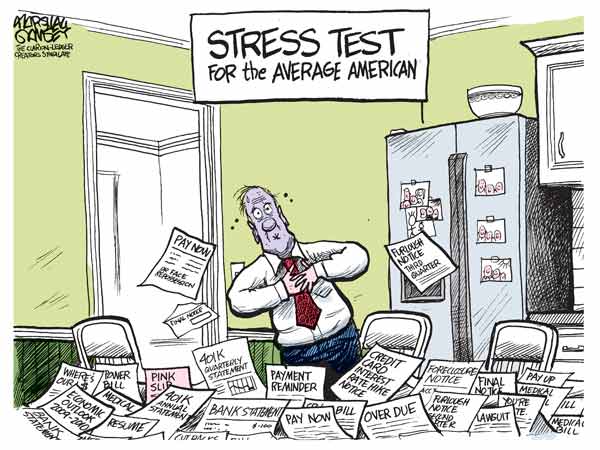
I’ve always been skeptical when I hear the government is going to try to regulate something that would otherwise balance through supply and demand. Credit card rates are no different. I respect that President Obama is trying to fix what he sees as broken or unfair, but some things don’t require fixing. There are those whose credit scores are low enough that their risk of default is high. It would be natural that those customers would see rates higher than those with good credit scores. Recently, news broke that Obama is planning to introduce legislation which would cap the rates card issuers could charge. So far, that cap appears to be 15%.
My fear is that when you put a price limit on something, you get less of it. If banks are forced to put a cap on their rates, I’m expecting they’ll simply cancel many cards, and offer their own FICO score floor, below which, they won’t offer any credit. This will result in a worsening of the current recession, and will have the unintended consequence of reduced spending and tighter credit. To be clear, I have no love of banks, and I think that anyone with a rate above 12% should do their best to negotiate a better rate or pay it off and cancel their card.
Joe
In “Disappointing Returns“, I discussed how the typical investor lags the market indexes by quite a bit. Another thought recently occurred to me, somewhat related. I suspect that a market return at the beginning of one’s investing life can create an expectation that will impact one’s choices for the rest of their days, creating a different risk tolerance depending on that early experience.
For example, we look at the generation growing up in the 20’s and becoming of age (i.e. starting work, and beginning to have investment choices) right when the great depression started. They saw an annualized ten year return from 1928 to 1937 of .9%, and, given the loss of jobs experienced, likely sold out and saw not even that small return.
Skip ahead to the 80’s. A return of 17.7% annualized, and only one down year in the decade. The crash of 87? Easily forgotten, as the full year was a positive 5.7%. Only those who were trading were really impacted, along with those who chose to retire based on the numbers they saw at the peak. All in all, a good decade to start one’s investing life.
The 90’s were almost a repeat decade, returning 18.3%, again with just one negative year. This combined two decades set up an unrealistic expectation as the long term market average has been just less than 9% for the eight decades prior. A full generation with a mostly positive market experience.
Now, let’s look at the current decade, the return from 2000-2008 was a negative 6% annualized. That’s 6% lost each year not over the whole period. Having enjoyed the two decades prior, dollar cost averaging year after year, even these last 9 years haven’t scared me out of stocks. But I’m thinking that those who have graduated school and joined this current market cycle, one worse than the great depression when judged by stock returns alone, as their introduction to investing are destined to view the market as dangerous and less likely to be stock investors.
Joe