by Joe
on September 2, 2010
With all the press about people not saving enough for retirement, or much else for that matter (the median household net worth is $91,304, including home equity) I’ve been thinking more about how people prioritize their spending. Debt taken on for college tuition has always been thought of as “good” debt. I’ll pass on that judgment and just call it a sometimes necessary evil. But for whom, the student or the parent? Should parents pick up the tab? There are studies out there for nearly everything, I wonder if any study has been done on whether students do better for the fact that they had their schooling paid for, therefore not needing to work while going to school, or if they did better having their own money at stake.

We have been fortunate, by having a child later in life, we were able to start saving from the day she was born and will be able to handle those bills by the time she’s in college. Others might be tempted to tap their equity lines or take early retirement account withdrawals to put their kids through college. I’d suggest not doing this if it puts your own retirement at risk, you don’t get a second chance to save. Fellow Money Maven Len Penzo offers 22 Signs Your College Degree Might Not Be Worth the Money, Craig Ford offers a different spin with Roth IRA college savings, Monevator gives us 10 reasons to retire early, Neal Frankle asks Can You Retire Now? Makes you wonder.
Joe
{ }
by Joe
on August 29, 2010
This week we start with a post by Roshawn Watson, My Big, Fat Trashy Home: The Fall of the McMansion. In this article, Shawn does a great job explaining the origins of these homes and how they cost you far after the purchase is over. The article hit home for me as we quickly discovered that we weren’t really using all the space in our house (just over 3000 sq feet) after we moved in. Do we really need a formal dining room, and what’s with that living room, when the family room is where we hang out? On the flip side we had a neighbor move away from a similar size home to one twice the size. Really. Me, I’m looking forward to the downsize, a nice 2400 sq feet.
JLP at All Financial Matters asked, Should We “Means Test†Social Security? This really is a tough question. Is social security meant to be insurance against poverty or a defined benefit retirement plan? He links to a video that states for 55% of retirees, social security is their main source of income. Remember, social security is already a progressive tax, the higher earners paying more for a lesser benefit. (A $60K earner will not see twice the benefit a $30K earner will upon retiring. ) The system is broken, and no, I don’t have any better idea for a fix.
Money Fund discussed the 6 Steps to a Satisfied Retirement. The post summarizes a consumer reports survey of 24,000 retirees, so it’s a distillation of quite a bit of experience and a good read.
My fellow Money Maven, Neal Frankle posted 401k Performance – 5 Tips To Turbo Charge It Now. With fewer companies offering a traditional defined benefit plan, and no one really sure if social security will be there when we need it, the 401(k) is now the primary retirement account most of us look forward to.
Next, Mike at The Oblivious Investor explains TIPS vs. Nominal Treasury Bonds. I don’t know when inflation is coming back, but it’s likely to return at some point given the trillions the government has basically printed and will need to over the next year. TIPS can help protect the value of your savings, keeping up with inflation.
Until next week.
Joe
{ }
by Joe
on August 28, 2010
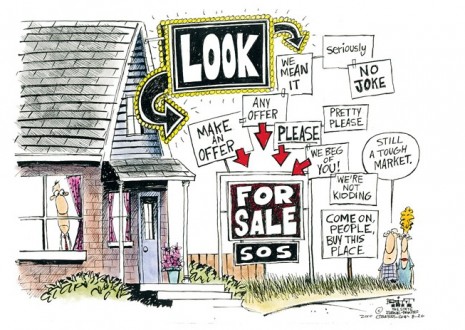
Even with the 30 year fixed rate mortgage dropping to 4.42% average, sellers are still struggling to move their houses, and new home sales have fallen to new lows.
{ }
by Joe
on August 27, 2010
It seems this is not such a simple question. What do you prefer, a stock that grows, long term, doubling in price every 7 years or so (this is an average 10% annual return) or one that grows more slowly, say at 5% per year, but offers a 5% dividend? I’ve seen arguments on both sides, those who take the dividend as a sign of strength, reflecting steady profits and the company disbursing a share of those profits with its shareholders each year.
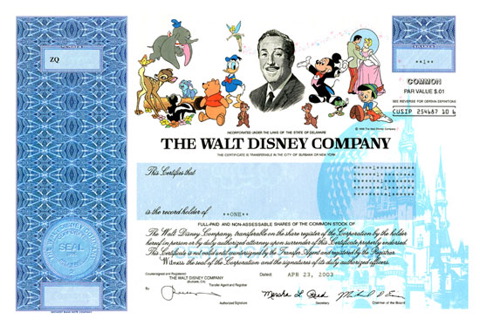
I’ve also heard those who say that a dividend is akin to a company saying, “We have no idea how to invest this money. We don’t intend to expand our reach either geographically or by delving into new markets. Instead of keeping it on our books and waiting for the next opportunity, you take it, shareholder.”
Legendary investor Warren Buffet, CEO of Berkshire Hathaway has never issued a dividend and ha not authorized a stock split (now there are B shares which are reasonably priced, not quite a split). The A shares trade at over $110,000 per, with a cash per share of nearly $17,000. No one is pushing Mr. Buffet to declare a dividend, that I know. Yet, Apple, trading at $240 or so with $26/share cash on the books has all kinds of speculation what they will do with this cash. A dividend? A takeover?
What do you think? Should we look more favorably on companies that issue regular dividends or should we just trust them to reinvest the money?
On a similar note, What is a Price to Earnings Ratio? Answered by Tom Drake at The Canadian Finance Blog.
Joe
{ }
by Joe
on August 25, 2010
As we’ve seen, the estate tax expiration had an impact of the families of a number of people who passed this year. But this was a one year deal, next year if congress doesn’t fix this, the tax comes back to levels not seen in nearly a decade.
That’s not all. When Bush was in office, income tax rates were cut under two bills, the Economic Growth and Tax Relief Reconciliation Act (EGTRRA) of 2001, and the Jobs and Growth Tax Relief Reconciliation Act of 2003. Before EGTRRA, and back in 2011, will be a lowest rate of 15%, no 10% bracket. To summarize, our current rates include six tax brackets; 10%, 15%, 25%, 28%, 33% and 35% as income rises. If no extension or new tax rates are passed into law you will see a return to 15%, 28%, 31%, 36% and 39.6%. This doesn’t look too bad, but I thought President Obama promised not to raise rates on those making less than $250K. This looks like the lowest earners will see arise, doesn’t it?
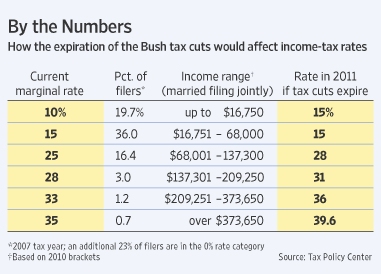
The child care credit is also due to expire. This credit was raised to $1000 per child, but is due to drop back to $500. This credit phases out for a couple making over $110K or a single person over $75K. Well below that $250K, Mr President.
Next, the Capital Gain Rates, today the long term (over 1 year holding period) gains as well as qualified dividends are taxed at 15% maximum. In 2011, the cap gain rate is 20% and dividends taxed as ordinary income. Ouch.
The countdown starts, just over 4 months to go to fix the potential train wreck 2011 will bring.
Joe
{ }