≡ Menu

Scanning into Evernote

I’ve written about Evernote, the software that you run on your computers, phone, etc to keep track of your stuff. Whatever documents you want to be able to access from anywhere with search capability. One feature I struggled with was the ability to scan right into the application. I had seen ads for ScanSnap by Fujitsu that lets you do this, but as I already have an HP Officejet, I was hoping that I could set it up to scan into Evernote without having to copy, paste, or import. Now, success. For those who aren’t aware, I am on a late model Macintosh, an MDD Dual core G4 PowerMac to be more specific. The HP is an Officejet J6480, a model recently discontinued, but I’m sure the process would be similar on current models.
evernote1
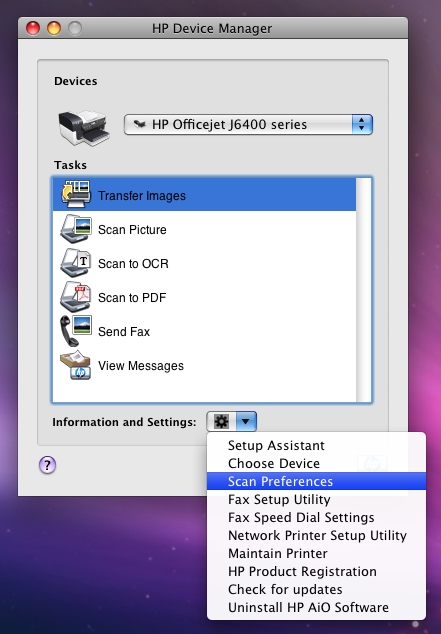
First, open HP device manager (search for it if it’s not within the HP folder among your applications), and go to the information and settings icon and choose Scan Preferences.
evernote2

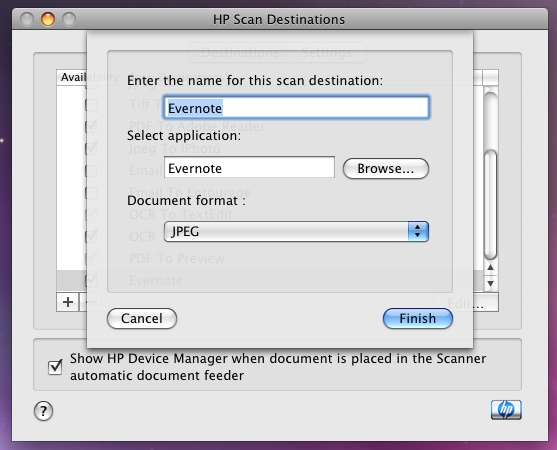
Next, enter Evernote into the destination name, browse to find the Evernote application, and choose JPEG as document format. Hit Finish, and you should be all set.
evernote3

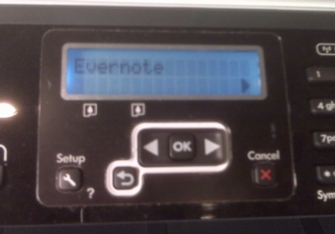
Now, when you press “Scan To” (toward the left on my printer, not shown here), the menu with offer you Evernote as a choice of destinations. You can now scan a document directly to Evernote without any additional steps.

Update – alternately, once you load Evernote as a destination you can use the HP Scan Pro utility to scan directly.

evernote4

The advantage is that you can crop images or select exact passages on a sheet of paper to scan. Again, this method will load the scan directly to Evernote.

Let me know if this worked on your scanner, I’d like to track which models can use this advice.
Joe

Models so far – HP2610, J6480, C4480

{ 28 comments }

Another Weekly PF Roundup

This week, I challenged myself to read PF blogs I hadn’t posted about before, finding some new (to me) talent.

Go To Retirement wrote Calculating a Retirement Income Replacement Ratio in which My GoTo makes a great case that the 70-80% rule of thumb is not accurate, and needs serious rethinking. He describes why the rate is higher for lower income people but drops below that 70% at higher incomes.

Ron at the Wisdom Journal asks if there’s No Such Thing As Good Debt? Given the current state of the economy and insecurity regarding jobs, I understand and respect the anti-debt movement. This post offered another analysis leading to that conclusion.

Richer by the Day offers a book review of one my favorite personal finance authors, Dr Thomas Stanley. His latest installment in his Millionaire series is titled Stop Acting Rich … And Start Living Like a Real Millionaire. Mike’s summary is enough to make anyone want to read the book in full, and understand its lesson, that the habits associated with being rich are the same habits most rich people avoid. The fancy cars, premium brands etc, all are habits that keep us from accumulating real wealth.

Another candidate for my List of Lists is 23 Things Beginners Absolutely Must Know About Saving for Retirement. David at Money Under 30 goes through the Topics of Retirement Saving Basics, Matching and Vesting, Rollovers and Withdrawals, and Choosing Your Investments with 23 tidbits of advice in all. An excellent post to bookmark for a repeat visit.

No Credit Needed posts How A Silly Little Experiment Helped Me Get Out Of Debt, offering his story of how a daily extra $5 paid to his credit card got him moving to eliminate his debt. Whatever works for you is what you should do. Over the years I’ve become more open to any ‘out of the box’ ideas that help people get ahead on their debt repayment or savings goals.

Last, a frugal post from Steadfast Finance, Restaurant Meals You Can Make at Home For Half the Price, recipes include Chicken Parmesan, Sweet Potato Salad, Roast Pork Tenderloin, and Southern Louisiana style Jambalaya. Nothing like eating well at home and saving some bucks.

Have a great week.

Joe

{ 0 comments }

Lessons Learned?

goldmansachs

Sad to say, our collective memory appears to be getting shorter, back to the same bad habits.

Joe

{ 1 comment }

Frugal Friday Week 23

Waste. It really is an ugly word. We waste food, money, time, electricity, gas, and countless other things every day of our lives.

Over the next week, why not pay a bit of extra attention to how you can avoid waste and save some money along the way:

  • Food – when eating out, don’t be embarrassed to ask for a ‘doggie bag’ and have the leftovers for another meal
  • Food – at home, serve smaller portions, so no extra on the plate goes into the trash, if you’re still hungry have seconds.
  • Electricity – in my house this is a sore subject, I constantly go upstairs to find the lights all on, but my wife and daughter still on the first floor. One bulb seems like nothing, but do the math and it really adds up.
  • Gas – How often are you waiting for a spouse or child to come out of school, a store, a friend’s house, and for whatever reason, the engine is still running? Break this habit now. You can stop the engine and keep the radio on if you wish without killing the battery.
  • Time – I’ve seen advice suggesting that when going grocery shopping, making and sticking to a list will save you money. Planning further so you stop at the grocery store to or from work will save time and gas. For me, the ride to the supermarket is 10 minutes each way, but I pass it on the way home so stopping while out is 20 minutes I gain.
  • Water – No, I won’t suggest to stop flushing. But, when brushing your teeth or washing dishes, that water running is costing you. Letting water run down the drain to warm it up or get cold water is wasteful.
  • Space – look around your house. Are there areas of clutter? The fact that it’s occupying space that you can use for something better means it’s costing you. Maybe not dollars and cents, but in its alternate, more enjoyable use.
  • Anger – A bit of a stretch, perhaps, but anger often wastes. It wastes your attention, distracting you from things you can do to move forward in your life. Unfortunately, we often can’t just step back and change the direction our mind is going. Too bad.

Where else can you start to eliminate waste from your life?
Joe

{ 3 comments }

Funding Matched 401(k)

When it comes to finance there are few issues that are black and white, right or wrong. This makes it tough for anyone answering a question but unable to draw out the further details needed to give the topic an in depth review. Often it comes down to numbers vs feelings. It gets even tougher when a reader writes “but the numbers show that those who feel good about their results…..”

That said, today I’d like to offer my take on the “pay off debt or invest” debate. When the choice is between paying off high interest debt or saving, even in an IRA, I agree, pay the debt. As we slide toward paying off that 6% student loan or 5% mortgage, the discussion gets more gray. Not to make this a Dave (Ramsey) post, but I’ve heard him as well as many financial bloggers suggest to pass on even a matched 401(k) until the debt is paid off. Not so fast, let’s do some math, I promise to keep it pretty short and simple. You work for an employer who matches the first 5% you put in, dollar for dollar. You are in the 25% bracket. To put $2000 in the 401(k) costs you $1500. Your employer matches it, and you have $4000 in the account. In 12 months, the $1500 you didn’t pay off is now up to $1800. You now borrow out half that $4000 at 6% interest pay off the $1800 and an extra $200. I understand the warnings against borrowing 401(k) money, and for the most part, agree. In this case however, if you lose your job, you have $2700 (after 25% tax and 10% penalty). Sure, you owe the 401(k) loan $2000, but you still pocket an extra $700 and knocked off $1700 in credit card debt. Grabbing that money is a low risk proposition.

We are told by the motivational guys to plan for success, not failure, right? You are going to stay employed. Your employer keeps matching your deposits. After 5 years, you have $20,000 deposited (I’ll ignore growth for now) which only cost you $7500 out of pocket, and you have $10,000 in a low interest 401(k) loan instead of high interest credit card debt. A 15% difference in interest is enough to keep funding the account and help you continue hacking away at the debt. I’m sure it’s a great feeling to pay off that last credit card bill, no doubt. Imagine how much better you’d feel also having a nice balance growing in your retirement account, funded with a combination of the employer’s money and the interest you saved by shifting from the cards to the lower interest 401(k) loan. It may take some month longer, depending on the amounts owed, their rates, and what you are able to pay toward the debt, but keep your eye on the big picture, the sum of the 401(k) balance minus the debt owed. This method will see your net balance rise fastest.

Of course, this takes discipline. You first need to get your spending under control and be committed to putting as much toward your debt as possible. Don’t confuse this idea with the suggestion that you take a loan from your 401(k) separate from the deposit and match. The steps I describe are the way to avoid missing the match which is free money, and at no point do you owe more than the match you are grabbing.

Disclaimer – If you really believe you’ll feel better paying off three 6-8% credit cards with $1,000 balances instead of applying that $3,000 to the 24% card with a $10,000 balance, then this advice may not be for you. And that’s ok, I hope my other posts give you ideas you can better apply to your finances.

Joe

{ 1 comment }