
≡ Menu

Latest on Flex Accounts

As I discussed in Flex Accounts at Risk a couple months back, congress is looking at reducing the benefits that a Flexible Savings Account can offer you. Right now, there’s no specified limit on the amount you can put away pretax to be used for nonreimbursed medical expenses, although most employers limit the figure to $5000 per year. Kiplinger reports in New Limits Coming on Flex-Account Contributions that it appears that congress is looking at reducing this benefit to $2500 per year. This is unfortunate and will have a greater impact on lower wage earners trying to squeeze out every benefit they can to stretch their dollars than it will the higher wage earner who likely has a more comprehensive health care plan.

One suggestion I’ve seen repeated is that if your child needs braces to take advantage of the flex account in 2010 and use that money. This may be good advice. May. You need to check with the dental side of your insurance and your flex administrator to understand the reimbursement timing. For the plan we have, the insurance assumes a 24 month treatment plan, and only handles the claim over that period regardless of whether or not we pay the orthodontist faster. The flex account then reimburses what the insurance doesn’t cover. The punchline to all of this is twofold. First, with payments spanning 24 months, it’s over two years or potentially three that you can use to fund the flex account. Second, the dollars are backloaded (i.e. your out of pocket cost is higher in the second 12 months than the first.)

With each plan’s rules varying, ask the right questions before you make any decision on your 2010 deposits. The account can be used for other expenses such as prescription glasses, doctor visit copays, over the counter medicines and more. The braces are just an example as they are both expensive and predictable. Let’s see if the proposed changes go through. Tell your congressman you’re not happy about this.

Joe
{ 3 comments }

My Weekly PF Blogger Roundup

At Suburban Dollar, Kyle reminds us that Base Salary Isn’t Everything. Between, 401(k) match, pension (perhaps), and a nice list of other benefits, we can see that salary is just one component of our compensation.

Debt Hawk takes another crack at the Flat Tax. I’m always interested in reading about this when the topic is raised, unfortunately, I think it’s very unlikely for it to ever pass. No flat tax in my future.

On My Super-Charged Life I read A Debt Free Manifesto – 10 Common Sense Reasons To Live Debt Free. Just when I think I’ve heard every spin on why one should avoid debt, another post comes along with a new twist. Good reading.

I saw an article at Bankrate asking Could you be saving too much? It quotes Harvard University economist David Laibson as saying, “About 10 percent of the population is accumulating too much retirement savings in the sense that they could have saved significantly less and still retired with enough resources to continue in the lifestyle they enjoyed during their working life.” I tried to find other citations from Prof Laibson, with no success. I find such unsubstantiated generalities with no link to any data to be curious. I’d bet that in any given group 3/4 believe themselves to be above average. Are this many people really over-saving? I doubt it.

In a view that’s the exact opposite of the above, Free Money Finance is convinced that Americans [are] Not Ready for Retirement. I agree that most of us are not going to be ready, the risk of over-saving is one that few need to worry about.

Adam Baker now staff writing at Get Rich Slowly, wrote about The Curse of a Big-Win Mentality. As I’ve come to appreciate, Adam once again offers an interesting spin on the the idea that one needs to take advantage of small wins as well as the big. He suggests that balance is key, not ignoring one for other.

And last, for today, 7 Tips to Achieve Retirement Success from Redeeming Riches. The post starts by reminding us that retirement is a marathon race, not a sprint, and the post continues with advice to help keep you on a path toward long term success.

Have a great week ahead.
Joe

{ 9 comments }

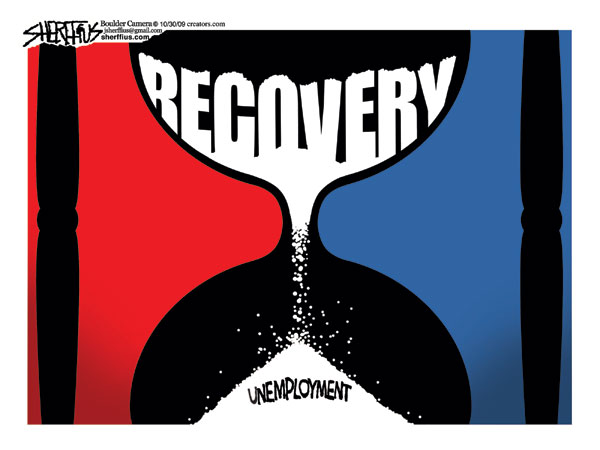
The New Trickle Down Economics?

trickle

Enjoy the weekend!
Joe

{ 1 comment }

Frugal Friday Week 24

The Black Friday Edition

Is it that time already? Only three weeks and it’s Black Friday, the day after Thanksgiving and the official beginning of the holiday shopping season. The name of this day has changed over time, but it seems to have settled on “Being in the Black” as in “profitable.” For the consumer, it’s come to mean a day of shopping madness, getting up before the sun rises, and heading to the store with mobs looking to grab a bargain.

I have mixed thoughts regarding this day. A bargain for something you don’t need and won’t use or give as a present is hardly a bargain. Do you really need a new _____ ? (fill in the blank for yourself.) On the other hand, if you’ve held off on replacing a really broken electronic device, or know now what gifts you’re planning to search for for the holidays, you may find some savings to be had. I found a few years back that some stores will refund the price difference if you buy an item the week prior to Black Friday and go in on that day presenting your receipt. This at least saves you the risk of running into a sold out item.

If the whole idea of chasing down a bargain on this day appeals to you, try to plan ahead, there are a number of web sites that manage to get the BF ads in advance so you can figure out your best strategy.

I wish you well on your Black Friday adventures, let me know what bargain (if any) you bought.

Joe

{ 1 comment }

Pay Debt or Build Emergency Fund?

What do you do? Save money for an emergency, when rates on savings are now well below 1%, or pay off the debt, especially credit card debt which can be at or above 30% per year?

Two schools of thought, one vocal one suggesting it’s irresponsible to forgo an emergency fund, the other, telling us to kill that debt ASAP. One well known advocate in the “emergency fund camp” is Dave Ramsey. He advocates saving a $1000 emergency fund and not rely on your credit cards for an emergency. This may sound nice, but I’ll suggest you look at this a different way. When you owe money, the next dollar you’d put to another use is costing you the highest rate you pay. So if your credit cards range from 12% to 24%, and your payoff plan has 4 years to go, that $1,000 sitting in the emergency fund earning you nothing is really costing you nearly $2000 by the time the last $1000 is paid off. A cumulative 100% interest. (Get a calculator and multiply 1.18*1.18*1.18*1.18 for four years’ interest.) During this time of going after your debt with a vengeance, you should carefully monitor your available credit, and make sure you have enough credit to get you through a potential emergency. Every individual has a unique situation, so the exact cost or savings will be different for you. The goal is the same, to stop paying interest and start earning it.

{ 12 comments }