≡ Menu

Today’s guest post is from Noreen Ruth –

Warning signs are everywhere with some so downright hilarious that the seriousness of the issue is lost in the hilarity. For example, “Not intended for human consumption” was a warning on a bottle of bubble bath. Or this one found on the packaging for a set of earplugs, “These ear plugs are nontoxic but may interfere with breathing, if caught in windpipe.” Or this warning on a hairdryer, “Warning: Do not use while taking a shower.” Well, duh!

While we may get a little chuckle from these seemingly silly warnings, their intent to protect is serious business. Consider the consequences of simply ignoring any of these warnings. In the same way, signs that point to poorly managed finances have dire consequences, if you don’t take them seriously.

Ignoring the Wisdom of Others
One reason some people are surprised to find themselves in financial trouble is that they were indifferent to the clues that were clearly on display. Inexperience and arrogance often go hand-in-hand when troubles are left unresolved. Wise advice is considered irrelevant or out-dated for the situation. Those who step up to point out clues to trouble ahead might include family and friends who have more experience to draw from. They offer their help so that you might avoid pitfalls that they may have gone through – perhaps because they ignored the signs.

The right attitude about money is vital to establishing and maintaining excellent financial management skills. If you still rely on parents or friends to support your way of living, you need to resolve your dependency or miss wonderful opportunities for growth and personal success. Money is a means to an end and should be thought of as a tool to be used to build and live a sustainable life.

To write about all of the warning signs of a poorly managed financial lifestyle would fill a book. For our purposes and with word count restraints in place, the most common warning signs are included in this checklist.

  • Has Little or No Savings: The target to shoot for is a minimum of six months worth of savings to cover any unexpected job loss or emergency. Without this safety net, you’ll be inviting disaster. A recent survey shows that nearly half of Americans have less than $500 in the bank.
  • Doesn’t follow a Budget: Anything well managed incorporates a plan to reach their goals; and so it goes with finances. Without one there’s no direction and will be easy to get off track.
  • Insufficient Income/Poor Job Performance/Outdated Job Skills: These issues are interrelated with one impacting the other two and vise versa. Begin by learning a new skill and being more responsible on the job and the income will resolve over time with a new job or a pay raise.
  • Uses Payday Loans: Using one of these is an act of self-imposed desperation. Not only are you borrowing on your own future income, you’ll be paying interest to someone else to borrow your own money.
  • 5+ Year Car Loan: Pushing an auto loan beyond 60 months is a warning sign that the loan is too much to handle in your current situation.
  • Denied a Loan or a Credit Card: If lenders consider you too high risk to approve additional credit, this is a warning sign that you already have too much debt in relation to your income.
  • Uncontrolled Credit Card Spending: Credit cards should never be used as supplementary income. Never use one to purchase everyday necessities – do without until cash is available. Eventually it all needs to be paid back to the lenders, a bumpy road for sure when you’re overwhelmed by credit card debt on multiple accounts.
  • Agreeing to Debt Consolidation while Continuing to Use Credit: This strategy will backfire, as you will basically be standing still while incorporating a plan that would normally help lower debt. Consolidating all your debt into one account can be a great way to dig your way out of debt, but not if you keep using your available credit.

Personal reasons unrelated to finance that may be triggers to future financial problems, include a lack of or insufficient insurance coverage on your health, car and home. Disputes and disagreements between couples about money are the most common relationship problem. Sometimes one partner lies or hides the truth about how they’re spending the couple’s money. Issues like these need to be addressed and worked on until a joint agreement has been reached.

By keeping alert to the warning signs of poor financial management and correcting your course when one crops up will free up funds to invest in college for the kids or to pad your investments set aside to secure a carefree financial future for your retirement years.

Identifying the warning signs is the first step; the second is equally important. You need to take action to resolve the issues to protect your financial integrity and future in the best interest of yourself and your loved ones.

About The Author: Noreen Ruth is a staff writer for www.asapcreditcard.com, a site that provides credit tips, news, credit card comparisons and reviews. She is interested in educating consumers about using credit responsibly and taking actions that will affect their ability to borrow the money they may need in the future.

{ 3 comments }

A Windfall Roundup

Let’s start this week with Andy Hough’s My Retirement Blog. Andy wrote why you should Take Advantage of a Stretch IRA, along with excellent examples of the kind of withdrawals required at various ages. The difference between taking the money and running and taking the deposits over the years can be huge. As long as the tax code still permits, consider the stretch if you are fortunate enough to inherit an IRA account.

Still on the IRA topic, at 20 Something Finance, G.E. Miller wrote Roth vs. Traditional Retirement Accounts: Why Roths are Not Always the Clear Winner. You see, there’s a bit of forecasting required, what bracket are you in now, and what might it be in the future? Those who retire with all their money in a Roth IRA have left money on the table, or worse, in Uncle Sam’s pocket.

windfall

Barb Friedberg asked (and answered) What Happens When Fed Exits From Stimulus? Yes, that’s the million dollar question. No, I’m not going to give you the punchline, just tell you that Barb offers a great discussion on the topic, tell her I sent you.

The discussion surround Apple and its offshore cash hoard seems to be fading in the news. One last article on the topic from Robert D Flach, the Wandering Tax Pro. Robert says Don’t Blame Apple, and agrees that they are simply following good business practice. If you have a congressman who is your friend, neighbor, or just in your pocket, why not tell them to suggest that the fault isn’t with Apple, but with our tax code, It’s congress’ job to fix this.

Andy Hough also guest posted at Tight Fisted Miser. He was still stretching, but this time he wrote How to Stretch your 5% cash back. A clever strategy to get 5% on more than just the select categories your card offers that quarter.

We’ll close this week’s roundup with William Cowie’s guest post at Five Cent Nickel – What do you do with your windfalls? A great question, as I often observe how people will treat their tax refund as a windfall, yet, it’s money out of their check every pay period. Check out Will’s thoughts on windfalls.

I’ve been tinkering a bit with a PB blogger feed. A page of the last couple posts that bloggers I follow have written. So far My Favorite PF Bloggers  is how I follow the PF bloggers I like best.

{ 2 comments }

A History of the Deal

dealhistory

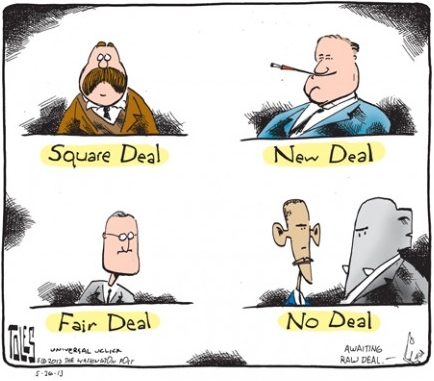
Ah, the good old days, when deals happened and made the history books. The GOP has made it clear, they really aren’t interested in any deal-making, and we are all the worse off for it.

{ 0 comments }

Frugal Friday Week 41

A minor shopping rant – “Shrinkage”

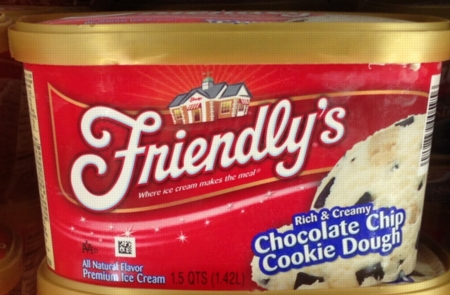
To the store manager, shrinkage refers to loss of inventory due to theft. To the consumer, it’s the reduction in product size over the years. I love Friendly’s Ice Cream. Some flavors more than others, of course, with pistachio being my favorite.

friendlys

But when it’s not available Cookie Dough is a close second. For most of my life the standard container was 1/2 gallon, otherwise known as 2 quarts. I didn’t notice when the change happened, all I know is that when I took a third serving, the fourth one didn’t look like much, and it was then that I noticed the container had gone down to 56 oz, 7/8 the half gallon volume. More recently, it’s down to 1.5 quarts as you see above. “Same great taste, now with 25% less ice cream per container!” Great slogan, no?

It’s not just ice cream, pasta is shrinking too. A number of brands of pasta have introduced whole grain wheat as a healthy alternative choice. Instead of a bit of a premium in cost, the package has the same shelf price, but instead of 16 oz they’ve dropped to 13.25 or 12oz  depending on the brand. I’d prefer to see a one pound package stay at one pound, just charge me a bit more. For some recipes, the odd size package means opening another box to get the pound I’m looking to cook.

Last, coffee. I never thought I’d reminisce about cans of coffee. When I was a young boy, coffee came in one pound cans.  Do you even know what a small can of coffee weighs? 11 oz, 12 oz? It’s all over the place depending on the brand. My Maxwell House that I buy at Costco is 42.5 oz. That’s 2.66 lbs. It’s $9.49 last I checked, a reasonable $3.57 per pound, but still the oddest size container I’ve seen in a while.

When you shop and are comparing one brand to another or one size to another, be aware, the standard sizes are gone. I can’t even tell you how much a can of tuna weights. That’s it. My rant is over, thanks for listening. If I’m not the only one, tell me, what product shrinkage bothers you most?

{ 5 comments }

A Guest Post today from my friend Crystal –

No-fault states often require that people purchase much more auto insurance than tort states, so it’s not a surprise that nine of the ten cities with the most expensive auto insurance rates are in two no-fault states. The following 10 cities have higher auto insurance rates than any others in the country:

• Detroit, Michigan ($4,599)
• Highland Park, Michigan ($4,214)
• Brooklyn, New York ($4,133)
• Fort Hamilton, New York ($3,947)
• Grosse Pointe Park, Michigan ($3,504)
• Bronx, New York ($3,443)
• Allison, Texas ($3,385)
• St. Albans, New York ($3,233)
• Springfield Gardens, New York ($3,213)

According to autoinsurancequotes.com in no-fault states, it doesn’t matter who caused the collision. The at-fault person will not be required to pay the medical bills of everyone who was hurt. The insurance company that insures the vehicle in which the injured parties were riding will be required to pay the medical bills up to the limits of the PIP insurance policy.

Required Insurance Coverage in Michigan

Along with Personal Injury Protection (PIP) insurance that pays everyone’s medical bills, Michigan residents must purchase Property Protection insurance in the amount of $1 million. Even though Michigan is a no-fault state, drivers are still required to purchase bodily injury and property damage liability insurance coverage. Generally, people are only required to purchase bodily injury and property damage liability insurance coverage in other states. Therefore, the greater amount of coverage and the higher limits will naturally increase the prices for people living in Michigan.

Required Insurance Coverage in New York

New York is also a no-fault state, and a greater amount of insurance coverage is required of drivers here as well. Motorists must have a certain amount of bodily injury and property damage liability coverage, but they are also required to have PIP insurance as well as uninsured and underinsured motorist bodily injury coverage.

Higher Rates for Everyone

In the cities mentioned above, even people in the most desired demographic who have the greatest driving records will be quoted auto insurance rates that are higher than they would receive in other cities. The reason is that insurance companies base their quotes on the zip code in which their customers live. For example, insurance companies perform research on different cities in which they sell insurance, and they often discover that more claims for auto insurance coverage come from customers from a particular zip code. Because this is the case, anyone who is driving in this zip code has a greater chance of filing a claim with the insurance company, and these drivers will be assessed higher rates.

Auto insurance companies set rates based on more than just the number of claims filed. The number of accidents and thefts and vandalism rates also play a role. Cities with a high risk for most or all of these factors are going to be the ones that have the highest auto insurance rates. Auto insurance companies charge clients who are less likely to need to use their insurance coverage lower rates, and those who live in high risk areas in no-fault states don’t fit this description.

How is your car insurance bill? Anything close to these top-ten cities?

{ 1 comment }