Let’s start this week with a post from POTUS, in which he asks Who is fighting for middle class tax cuts? From what this calculator offers, families right up to the $400K level would fair worse under Romney’s tax plan than Obama’s, but once past $500K, it’s Romney all the way. He we go, back to the 1% vs the Occupiers.
I was a bit surprised to read Forest at Frugal Zeitgeist tell us I don’t give a damn about my credit score. I’ve decided that credit is a bit like religion, there are those who believe that debt is to be avoided, and that those who use credit cards on a regular basis are flirting with disaster. Others believe that like guns or sharp cooking knives, they have their place when used correctly. Forest shared how he made some bad decisions in his early 20’s that made him swear off credit cards forever. With that, came his lack of wanting to care about his credit score.
An interesting post from Lazy Man and Money – New Nonsensical Stock Trading Idea: Someone Else Paid A Lot More For It. In this article he discusses a few recent stock purchases, made far below the highs these stocks had risen to. Since people were willing to pay far more than this, the price I’m paying now is better. Hmm. Maybe. But he’s also clear, he’s only putting up a small bit of money on these purchases. Stock picking is a pretty touch game.
Len Penzo offered a remarkable The 50 Biggest Money Mistakes Household CEOs Make. An amazing list of mistakes to avoid. Avoid them all and you’ll be richer for doing so.
At One Money Design, Kevin (from Out of Your Rut) tells us Why Now is THE Time to Refinance. I’m now at 3.5%, and up until a few years ago never would have dreamed of such a low rate. My first mortgage was 13-5/8% and it was a 15 year fixed. To me, this is pretty amazing.
And to wrap up this week, Rob Bennett explains What We Can and Cannot Predict About Stock Returns And Why. Rob’s focus is on P/E10 (the ten year trailing P/E) and how it can be used to forecast stock market performance. Unfortunately, if I am reading correctly, the current 10 year forecast is centered around a 2.21%/yr return. Not so good.
{ }
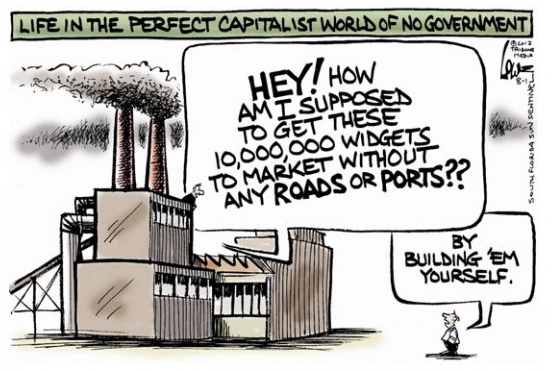
The Obama “You didn’t build that” is still making the rounds for those who would like to ignore syntax and context. This gave me a bit of a chuckle. I’d still like small government, but do appreciate the infrastructure the government is responsible for.
{ }
I’ve been hearing the word millionaire more and more in the news and political discussions. According to Google Trends, it’s just me, the word started to gain more attention in late 2008 as the move Slumdog Millionaire was released, but has been steady the past few years.
The Bare Naked Ladies (if you don’t know the band, they are neither) song If I had a Million Dollars released in 1992 still made a million sound like a lot, but the Black Eyed Peas got it right with their “I Want to be a Billionaire.” That’s the kind of money that gets you closer to being on the cover of Forbes. A million? Not so much. Is a million still enough to make you a millionaire or is $5 million the new million?
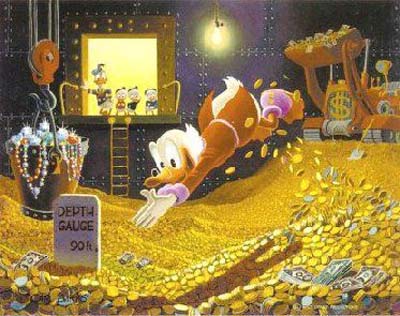
It really depends what dates you choose for comparison. The Inflation Calculator tells me that the same million when I was 10 years old, in 1972, is only worth $191K as of 2010 (the latest year you can enter in the calculator.) This means the same million I dreamed of as a 10 year old would take just over $5 million today to buy the same goods. A million may still be a nice chunk of change to accumulate, but more as a milestone than an end goal. When we talk about our Number, the amount we need to save to generate enough money to retire, we typically use 4% as a safe withdrawal rate. If that’s the case, a million dollars looks more like a lifetime stream of $40,000 per year. If you add social security to this figure, maybe from two earners, you might be closer to $60,000 which for most of us can actually provide a comfortable retirement. But to the 40 year old who hasn’t yet sent the kids to college, paid off the house, or decided what he wants to be when he grows up, that million isn’t the “quit your job and retire” that it used to be.
By the way, income and wealth are two different things. There are people making over $250K a year who burn through every last penny, and there are couples making under $100K, yet have savings well over a million dollars. When I hear the talking heads talk about the high earners as being millionaires, I think they’ve chosen the wrong words.
{ }
Blogging at A Young Investor, Tony shares his investment strategies and his thoughts on the financial markets –
Investing is an extreme game: when you lose, you feel like crap, but when you make money and outsmart the market, you feel like you’re king of the world. So how should you emotionally deal with both situations? Do you bang your fist against when table and scream insults when you lose a chunk of money? Should you party for a week after making a huge profit? The answer to both is no.
Losing Money
- I admit that I’m no novice when it comes to losing money. It feels like you’ve been punched in the guts and the wind’s been knocked out of you. Many investors dwell on the pain, unable to get out of the “losing psychology” trap. Here’s what you should do.
- Stay calm and keep your emotions in check. A lot of money is lost when investors make investments solely based upon their emotions.
- Many investors make the mistake of investing after they’ve been hit with a loss in hopes of making back what they lost. Doing so will definitely magnify your loss (hence why people say “losses beget more losses“). The important thing right now isn’t to make back the money you lost – the important thing is to rebuild your self-confidence. Confidence is key when it comes to investing, because you’ll have the conviction to stick to your position through rough times.
- Do something to take your mind off the markets. In order to calm down and take measure of the situation, you need to step away from your investment. Do something fun that you enjoy.
- Once you feel calm, take some time to think about why your investment lost money. What something in your original market hypothesis wrong? What can you do next time to prevent a similar mistake?
- Like I said, it’s imperative that you regain the confidence you’ve lost. Instead of investing like you normally would, wait patiently for a golden opportunity, one of those investments that have a 95% chance of working out. Making some money (no matter how little) will help you rebuild your confidence.
On the other hand, booking a large profit is a totally different feeling. The thrill, the excitement… Here’s what you should do.
Profiting
- It’s a common mistake among investors to become overconfident. Overconfidence leads to arrogance which leads to disaster. That’s why after every successful investment, I like to take some time to let the excitement wear off. Don’t jump right back into the markets – overextending a position can lead to disaster.
- Now comes the hard part. Ask yourself (honestly) – did I make money because I was lucky, or because I was right? How do you tell the difference? Before you made the investment, you should have a list of reasons explaining why you believe this investment would work out. Now, count the number of reasons you wrote down that actually did happen. If more reasons on your list didn’t happen than those that did happen, than you were probably lucky as opposed to skillful.
- Invest more heavily than you normally would when you’re on a winning streak. As they say “winning begets more winning” because you’re more confident about your decisions. Second-doubting is detrimental to successful investing.
{ }
Let’s start this week with Len Penzo’s game of Are You Smarter Than a 5th Grader? Then Guess the Price of This. Maybe it’s a bit obsessive, but I always get a kick out of comparing unit pricing of two different sized containers of the same brand item. This story is just crazy.
This week, I learned from I am 1 Percent How And Why We Tithe. If you’ve not met the 1 percenter, let me say, while his income is high when combined with his wife’s income, so far he appears to be one of the good guys. Not like the bankers who nearly broke the world economy a few years ago and all belong in jail.
At Money Help For Christians, Craig Ford wrote why God is Happy for You to Make Millions. It’s more about how you handle the money, than the fact that you’re making it. A thought provoking article.

Five Cent Nickel asks if there are Credit Card Fees on the Horizon? And it seems that may be the direction some stores are going. This runs contrary to the cashless society one of his readers mentions, but time will tell. Cash discount, credit card surcharge, consumers will go toward what they find convenient and valuable.
How Much Should I Have Saved For Retirement? This was the question asked at First Million Blog. And it’s the question we need to ask to understand our ‘number’ that magic sum needed to provide us with enough money for a happy retirement.
A guest post at Boomer and Echo Why Your Financial Plan Sucks. Good to read this article and have your plan not suck.
Let’s wrap up this week with the Oblivious Investor’s Is an In-Service 401k Distribution a Good Idea? It’s an interesting question that doesn’t have a yes or no answer. It depends, see how, and decide what’s right for your situation.
{ }