≡ Menu

A Bastille Day Roundup 2012

Well, I’m embarrassed to say I learned that the book (and the Broadway show) Les Miserables was not about Bastille Day, but was set some time after. On the other hand, the song by the band Rush was actually about Bastille Day, even though the song itself contained a number of historical inaccuracies. For now, I’m sticking with the imagery from Les Mis. (By the way, July 14th was the actual day, so it was yesterday.) On to this week’s roundup.

My friend, Neal Frankle explains how to Use Income Shifting to Lower Your Taxes. Some interesting ideas how the shifting of income to your loved ones who are in a lower bracket can help your family’s tax burden. Neal explains how hiring family if you are self employed or giving away income producing assets can benefit you.

Kay Bell explained why Home sale profits usually don’t create any tax bills for residential sellers. Check out her article if you’d like to understand why the tax man usually goes away empty handed after most home sales.

At Enemy of Debt, Dr Jason Cabler guest posted the 6 Credit Card Lies We Believe. To be fair, Jason makes some great points. Where we agree, I believe, is that when you divide people into two groups (think “Venn Diagram”) the group who pays in full and has an over 20 year run of having done so, is quite different than those who are floating debt month to month. I agree the debt floaters need a plan to get out of that cycle, and have proven themselves to be the group that should avoid credit cards. On the other hand, the pay-in-full crowd has little to worry about. Jason cites the studies that show those who use credit cards spend (at least) 12% more than those who use cash. I welcome any reader to produce such a study. But only if it is not a contrived one. Handing college kids a $10 bill or a gift card doesn’t extrapolate to a married couple earning 6 figures and managing a $4000 per month budget. In my opinion.

Next, columnist Scott Burns asks It’s 2012: Do You Know Where Your First Million Is? That’s the title of his article, but the real question is, “How much money would you really need to have a choice about working?” Scott offers some very interesting discussion to try to help his readers answer this question.

At Canadian Finance Blog, Alan Schram talked about Alternative Bulk Purchases. He looks at a few items that you might not consider “bulk” but the the savings you may find are just as good. A nice spin on the topic.
 

{ 0 comments }

Something Fishy about Bain

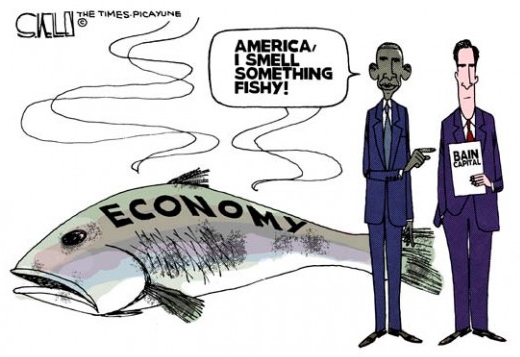
In March I wrote a piece titled The Domino Effect, how I thought Bain Capital wasn’t particularly good for capitalism. Shortly after, I hosted a guest post Why Private Equity Does What it Does, a well written opposing view on the matter. It seems the press and political cartoonists have jumped on the bandwagon, not impressed with Romney’s old company.

{ 0 comments }

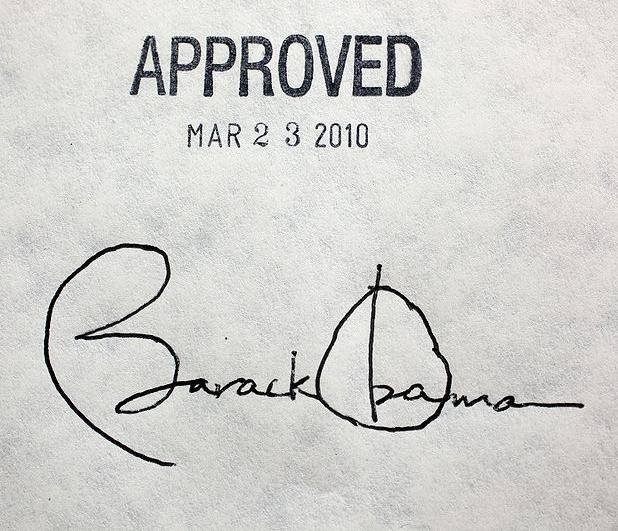
More on Obamacare

It’s remarkable to me that a law intended to help people who seem to need it the most has turned into such a political football.

It turns out that Jane and I are covered by insurance, we chip in a bit, our employer a bit, and there’s a convoluted system of deductibles and copays. We then struggle to do the math and put some pretax money into a flexible spending account to make our co-pays tax free.

I know that not everyone is so fortunate, I know a gal who is not able to work, and spends more than half her monthly worker’s comp payment towards insurance. But someone living on such a low income would not be expected to pay more than about 6% toward their insurance premium, so when the Affordable Care Act kicks in, she will see an upside to her spendable money of most of her current premium.

So far, the focus has been on the penalty aspect of Obamacare, instead of the benefit the needy will receive. As I read the numbers that would apply to low income families with 2 kids, they will be able to purchase insurance that would now cost $12000 per year for $2200. When you read the Summary of New Health Reform Law, you find that for the 90%, the plan looks to be a positive thing. I arbitrarily choose 90% because I know that this is a zero-sum game, someone needs to pay the supplement for those who are currently uninsured but will receive a discounted rate. For all of the money government wastes,  the pork barrel spending, the bridges to nowhere, I’d be happy to pay a bit more knowing my money will keep a lower income family’s child from getting the care she needs.

The document isn’t that long, 13 pages compared to the near 100 pages of the recent supreme court ruling. As Kay Bell who writes at Don’t Mess With Taxes has discovered, it’s Congress who want to kill this plan because Killing Obamacare means better health benefits for members of Congress. You realize, our Congressfolk are above and beyond any of the laws they make for us common folk. They are not part of the social security system, and have medical coverage you or I would really envy.

Our Healthcare System is broken, and I can’t say that Obamacare will fix every aspect of it, but I think it’s a step in the right direction. Those who are uninsured won’t be turned away for emergency care, nor should they be, and a system to include them in the process is a good step in the right direction, in my opinion.

Last, a website, ObamaCare, The Truth, The Lies, offered an infographic on What Obamacare Means to New Yorkers. It focused on the added cost, the penalty for people of different incomes and showed their total tax burden. Unfortunately, the accounting firm that offered the numbers didn’t calculate the taxes correctly. They published number that showed a tax on one’s gross income, skipping the forms, and all potential adjustments. A single gal making $80,000 does not have a taxable income of $80,000. I guess they never read my article on marginal rates.

{ 0 comments }

A Guest Post from David Rodwell –

It’s been demonstrated over and over again that businesses which accept credit cards bring in more revenue than businesses that don’t. While the underlying assumption here is that accepting credit cards brings in customers who wouldn’t otherwise patronize a given business, there is another factor at work here. According to some recent research by Professors Promothesh Chatterjee and Randall Rose of the University of Kansas and the University of South Carolina respectively, credit card customers actually spend more than cash customers.
Here are some of the findings in their research about why credit card customers were likely to spend more than cash customers:

  • Cash customers were more concerned about price at every level. In the research process, customers that were primed to use cash were more concerned about cost than they were about benefits. This extends to every area of cost, including things like delivery and installation costs, as well as warranty costs.
  • Credit card customers were more concerned about features. In contrast, credit card customers were more concerned about the features of a given purchase. As such, they had greater recall of a list of features, and relatively poor recall of cost-related information. They weren’t concerned with things like delivery, installation, or warranty costs.
  • Credit card customers were more likely to make a decision based on status and image. Brand became a lot more important to credit card customers. They were more likely to focus on the benefits of a given purchase, even beyond the actual product benefits. They were also more likely to make frivolous buying decisions, and buy high-profile products.
  • Cash customers tended to miss out on benefits. While it may sound like paying cash is always a better idea because you’ll get a better price, this isn’t always the case. Cash customers had poor recall when it came to understanding benefits in a product comparison. That means if you need to make a purchase of something that has to be effective, accurate, or durable, paying cash may actually impede that process.
  • Consumers can be primed to use credit. There are a number of ways that businesses can actually prime customers to use credit, thereby increasing transaction amounts. For example, placing credit card signage at the door and at the register, or offering store credit offers in the store can sway those people whose payment method was undecided toward using a credit card.

These findings are interesting on several levels. For one, the fact that your intended payment method actually affects your memory and ability to recall certain information is truly interesting.
Add to that the idea that the researchers put forward that the “pain of payment” – that is, the immediate recognition that a given purchase’s cost has reduced your money – is almost nonexistent with credit card purchases. The payment is often separated from the purchase by weeks, whereas cash customers immediately get to watch their reserves drop when they spend.
There are several lessons to be learned here, not the least of which is that a cautious consumer carefully chooses her payment method based on what she’s hoping to get out of a purchase.
David Rodwell is a seasoned writer in business and personal finance, taking a particular interest in payment processing. You can find more of his articles located at CreditCardProcessing.net.

{ 6 comments }

A Backyard Party Roundup

With the summer in full swing, I read Frugal Dad’s How to Host a Cheap Backyard Party this Summer very carefully. A lot of great ideas here, and don’t confuse cheap with cheap. There are ways of having a great get together and not blowing your budget for the month. Check out Frugal Dad’s idea of a good time.

At The Simple Dollar, Trent wrote about Microrewarding Yourself. It’s a great way to motivate your family or yourself to reach small goals. Trent is one of those bloggers who consistently comes up with really original ideas you can use quickly.

Copyright All rights reserved by camillestyles

My Money Blog offered a discussion of a recent Times article Comfortable Retirement = Saving 11 Times Working Income? I think the Times number far too low, if Social Security counts for nearly 5X, I think there’s still nearly 20X to go, nearly twice the Times’ recommendation.

At Money Infant, I learned that the cost of raising a child to the age of 18 is nearly a quarter million dollars. The numbers depend on many factors, I’m sure. I’m expecting college alone to cost nearly this much for four years once my daughter gets there. No one said kids are cheap, but I wouldn’t trade being a dad for ten times the cost.

Thank You To People With Credit Card Debt” Young and Thrifty offers his appreciation to those who are paying interest, as they are helping to support the rewards that we pay-in-fullers are collecting each month.

Let’s wrap up this week with Rob Bennett’s The Year in Which You Are Born Determines Whether You Will Be Able to Retire Or Not. I’ve suspected this was the case, observing how the last few years of recent grads have had such a tough time finding jobs out of school and the impact of this will affect their lifetime incomes. Rob discusses how the stock market cycle also impacts one’s financial success. An article worth reading.

{ 0 comments }