≡ Menu

The God Particle Discovered

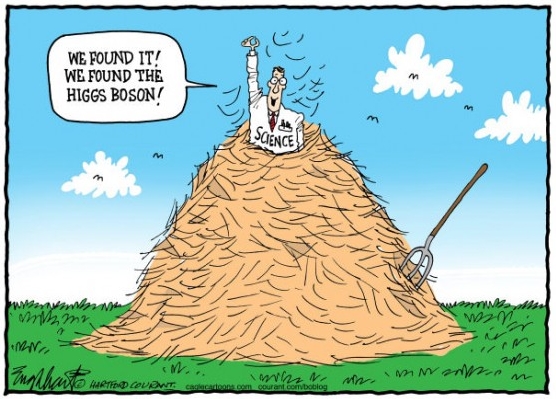
Staying away from politics this week, the one bit of news that came out was the discovery of the Higgs Boson.

While it’s beyond my ability to explain exactly what it is, the Higgs Boson is what gives subatomic particles their mass.  I know that it was postulated to exist by a scientist named Higgs back in 1964, and that Stephan Hawking bet $100 would not ever be discovered. Professor Peter Higgs is still alive and Hawking kindly suggested that he be awarded a Nobel prize for his work.

{ 0 comments }

Happy Independence Day 2012

I subscribe to the Rasmussen Reports web site, as I’m interested in following the polls in this election year. Rasmussen runs many surveys that are about the US, the nation’s views on many topics, including some which prompt me to scratch my head at the response.

Yesterday’s headline from Rasmussen –

74% Know July Fourth Celebrates Adoption of the Declaration of Independence

Huh? One in four adults don’t know why we barbeque today? I asked Jane2.0 (my daughter, 13) “What do we celebrate today?” She replied “It’s Independence Day.” Ok. “What happened today, exactly?” “They signed the Declaration of Independence.” Whew. No flies on her. To be fair, the exact wording of the poll question was “Does the 4th of July celebrate the signing of the Declaration of Independence or the ratification of the U.S. Constitution?”

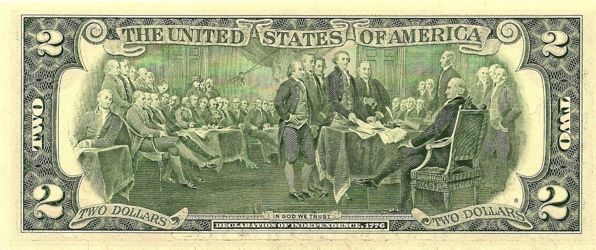
The constitution is important, but the Declaration of Independence is huge. I love this image. And I’m sorry it’s on a bill that’s not widely circulated. Years ago, I asked my bank to order me a bunch and they said they come 1000 at a time. They agreed to order a 1000 if I took 500. I’ve been spending them here and there ever since.

Since, by the laws of adverse selection, my readership isn’t random, I’ll assume that any US, Canadian, or Mexican readers already know what today is, and for the rest of the world, if you didn’t know, now you do.

Happy July 4th!


{ 1 comment }

The Beginner’s Guide To Budgeting

Budgeting is a term that may seem intimidating due to the assumption that it means “giving up” the things you’ve become accustomed to. In reality budgeting is the process of organizing your spending so that you develop sustainable long-term habits. Learning the basics of budgeting makes it easier to determine if you are living beyond your means or if a few small changes to the way you manage your finances can get you back on track.

Start by Meticulously Tracking Your Spending
Budgeting is about getting personal finances under control and knowing where money is being spent. The first part of creating a budget is tracking every penny and the type of transaction. This ranges from paying in cash to using a credit card – in some cases it can also include tracking personal investments and mutual funds.
Start by writing down every conceivable monthly expense. This will include things such as groceries, fuel expenses, clothes, and entertainment.  If you are creating the budget for your family, ensure you account for medical check-ups, dental and vision care, and medication. These expenses are typically recouped if you have health insurance but it can take weeks for a claim to be processed by your insurance provider.

Segment Your Expenses Into Lists
Make two lists: the must have list and the want list. The must have list should include bills like utilities, housing, groceries and medical costs. It should also include any debt payments and a savings goal. These are necessary expenses and the highest priority when making a budget.
The want list should include extra expenses like a coffee at the local coffee shop or the meal out with friends at the end of the week. Anything that is not necessary goes onto this list. These are the items that can be scaled back when money is tight.

Crunch the Numbers
Using accounting software or a good old fashioned piece of paper and a pencil it is time to crunch the numbers. It’s quite a simple process, just subtract your monthly expenses from your monthly income. This determines the amount of money you have to work with and how your money is being spent.

Additional Considerations
Most people stop at this point. With a loose budget in place they go on their merry way. However, I always recommend assigning at least 10-15% of the monthly budget to unexpected expenses. This tactic is a fail-safe; the money in the sock drawer if you will, that will keep your head above water even in the most pressing financial times.

About the Author
Carly Lance is the online marketing coordinator for Personal Bankruptcy Canada, a network of Canadian bankruptcy trustees that help “good people deal with bad debt.”

{ 0 comments }

An End of Q2 Roundup

Let’s start with week with a question asked at Afford Anything, Is Six Figures Still a Lot of Money? With half of the families in the US making less than $46K each year, $100K may seem a huge income. Yet, about 20% of families make more, pushing prices up for the rest of us. Which prompts the question – is $250K the new “six figures”?

Len Penzo discussed 15 vs 30 Yr. Loans: The Added Cost to Retire a 30-Year Loan in 15. Len offers a great analysis taking into account the lower rate a 15 year offers. With rates so low, the decision isn’t so simple, it often comes down to emotion, not finance. As I often say, one can’t put a price on a good night’s sleep. Lower payment and better cash flow, or a mortgage retired in a shorter time, whatever let’s you sleep better.

On the same subject, The Financial Buff does a bit of math in Borrow 30-Year and Invest The Difference, an interesting bit of math that shows the breakeven if you go 30 year and try to invest what you save. We may have to put him in a ring with Len and let them fight it out.

It’s been awhile since I was Thinking about Dave Ramsey, and my remarks about the mathematical failure of his debt snowball. This week I read a new variation on the snow theme, Silicon Valley Blogger suggests you Wipe Away Debt Problems With Debt Snowflakes.  There some good details about what this means, but the bottom line is that you’ll send small payments many times over the course of the month. In the end, I won’t argue with success. If you are in debt, do what’s right for you.

At Moment on Money, Variable Annuity Prospectus: Clarity or Confusion? Art writes how few people actually read through the Prospectus when buying a variable annuity. Little surprise. I’ve said it before, VAs are sold, not bought. They are sold because the salesmen have kids to put through college. I have yet to find a VA with terms that looked appealing. Truth is, it’s not easy to get a prospectus as these are not financial products, but insurance, which means they are sold by people licensed in your state and unlike stock reports, are not usually available to be downloaded. What are they hiding?

At Mighty Bargain Hunter, Hey, that’s funny! Here’s some free stuff. I don’t get much free stuff, maybe I need to work on my material.

And that’s a wrap. Happy July!
{ 0 comments }

Obama Care okayed by SCOTUS

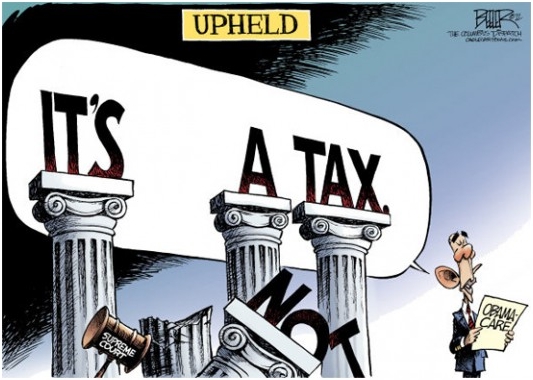
The Supreme Court ruled and it seems they decided that Obamacare is a tax and therefore constitutional. What I find curious is that our former Governor, Romney implemented a very similar health care requirement in Massachusetts. Has he decided in hindsight, it was a bad idea?

{ 2 comments }