≡ Menu

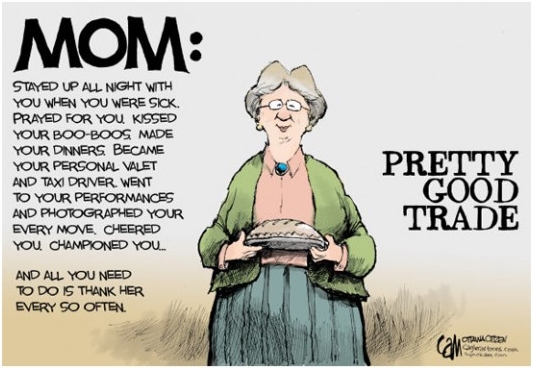
Fair Trade?

In the United States we celebrate Mother’s Day tomorrow. In Mexico, it was celebrated yesterday, pretty cool to have it fall during the week, I’d day. There was a time that the true test of the local phone companies was whether they could handle the traffic on Mother’s Day, as this is the highest phone use day of the year. Happy Mother’s Day to all the mom’s who are reading.

{ 0 comments }

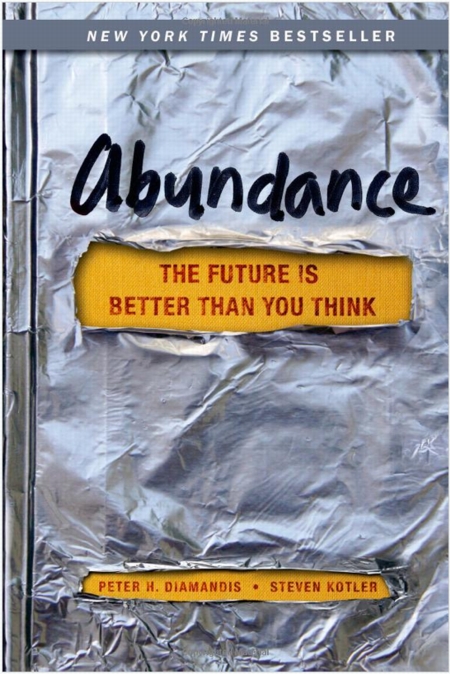
This book makes the remarkable case for a future in which the current level of poverty at the low end is virtually eliminated. I continue to be stunned by the data at Globalrichlist.com which shows that half the world lives on less than $850 per year. It doesn’t take much in the way of improvement to double and redouble their standard of living. I’ll offer a few observations from my reading of Abundance as to how the world may change over the next decades.

The larger issue for the poorest of this world is the lack of clean drinking water. Authors Peter Diamandis and Steven Kotler describe the large number of person-hours spent each day simply fetching water which isn’t always of good drinking quality. Dean Kamen, inventor of the Segway is currently working on a water purification device which can be powered from virtually any source of power and will produce 250 gallons of water per day, enough for 100 people. His target cost for this machine is sub $2000.  Even if you focus on the fact that the target market for these machines are making less than $10 per week, this one time expense of $20 per person will free up many hours of family time from the whole water fetching process. Add more of these systems and the issue of clean water for one’s crops start to be a non-issue.

The other technology that holds great promise continues to be solar power. For the parts of the world where there is no “grid,” it’s possible there may never be one. Just as there are parts of the world that skipped right over providing phone lines all over the place, instead just putting up cell towers, solar may be the next step in bringing electricity to the world. Where burning kerosene lamps is expensive, dangerous, and unhealthy, solar power can charge storage cells to extend the daylight into early evening, provide power for computers, and bring up the education level of the world’s poor. There is a direct correlation between improvements in education and health and the reduction in overpopulation. This book makes a great case for the potential to wipe out the pervasive global poverty within the next two generations.

Abundance runs 240 pages, and then another 100 of notes and references. It does an interesting job of projecting based on current science and the rate of progress we are experiencing. It borrows from, and complements my recolewction of Ray Kurzwell’s The Singularity is Near, another good read.

{ 0 comments }

A guest post by Nick Simpson –

Car insurance isn’t just something that’s nice to have; it’s required by each of the 50 states if you want to operate a motor vehicle. For some, car insurance is a necessary evil; it’s an added expense on top of already-tight budgets. Other people recognize the value and protection that it provides, and don’t mind paying for it.
To make things even more complicated, insurance rates can vary greatly from one state to the next. Here’s a list of some of the most expensive states to insure your car:

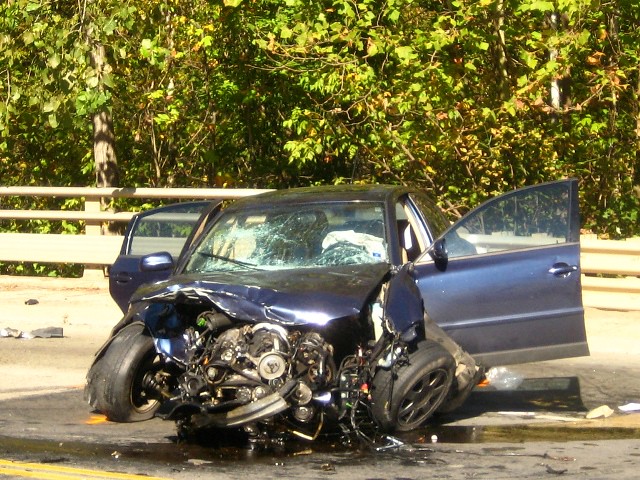
Some rights reserved by InsureWish.com

  1. Louisiana. Year after year, Louisiana tends to be either #1 or #2 in terms of the most expensive states for car insurance. There are a couple of reasons why premiums are so high in the land of Jazz and Cajun food. First of all, jury trials in Louisiana are only available on claims of above $50,000. That means many insurers settle out of court, usually at $49,999. Add to the fact that Louisiana’s road infrastructure is one of the worst in the country, and you can begin to see why they’ve got insurance problems.
  2. Michigan. Vying for the top spot is Michigan. The birthplace of the automobile is also one of the most expensive states to insure that automobile. Michigan has a mandatory requirement that auto insurance provide lifelong medical care for the injured parties in an accident, regardless of their own policy limits. This “Personal Injury Protection” requirement pushes prices into the stratosphere. Add in the high unemployment rate (Michigan has never fully recovered from the post-9/11 recession, and was even further devastated after the housing crisis) with so many uninsured motorists, and prices have remained high.
  3. Oklahoma. Liability is a required coverage in the Panhandle State. The high liability minimums are required to cover bodily injury as well as property damage. In addition, the state’s insurers levy heavy penalties against those who allow their coverage to lapse, as well as severe penalties for driving without having a proof of insurance. These factors have pushed rates up steadily in the state for years.
  4. Montana. This western state is pretty uptight about insurance overall. If you’re caught driving without insurance, you can get a three-month jail sentence. Do it several times and you can lose your license for good. In addition, Montana considers all new drivers as “high risk” – not just those who have multiple accidents in their history. New drivers can provide proof of having completed a driver’s education course to get a bit of a discount, but rates are still higher than in most other states.
  5. California. The nationwide average for accidents that are caused by uninsured drivers is 14%. In California, a full third of accidents are caused by uninsured drivers. What that means is that drivers carry uninsured coverage, so that their insurance is going to make the payments regardless of who is at fault. This means that the rates in California continue to rise, at almost the rate that the number of residents does. It’s that growing population – one in eight Americans lives in California – and you wind up with millions of accidents and insurance claims in that state each year.
  6. South Dakota. Like some of the other top states, South Dakota has some of the highest coverage minimums. Their bodily injury, accident liability, and property damage minimums are higher than all but two other states. This has shown a steady rise in premiums over the past several years.
  7. New Mexico. New Mexico’s minimum coverages are fairly high, near those of South Dakota. Only their property damage minimum is less than South Dakotas. New Mexico is also one of the states that allows insurers to base your auto insurance premiums, in part, on your credit history. During tough economic times, credit histories get worse and insurance costs therefore increase – which is what’s happened in the past few years in New Mexico.

If you live in one of these states, it’s important that you do your research when you’re getting ready to buy a car. Find out which cars will cost you the most, and which ones will get you an insurance break.
You also need to talk to your insurer to find out what kinds of discounts are available. Often, you can realize substantial savings on your car insurance if you have multiple vehicles, multiple drivers on the policy, or if you bundle your auto insurance with other insurance policies.

Nick Simpson is Social Media Coordinator at Fred Loya Insurance. Fred Loya provides general car insurance as well as unique services catered specifically to customers in multiple states. Car insurance in Colorado and auto insurance in California are two areas where they have excelled in recent years.

{ 1 comment }

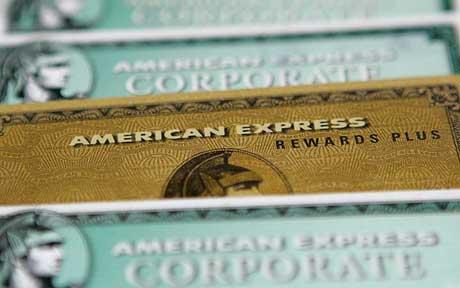
A Credit Card Fail Roundup

Let’s start this week with Barry Ritholtz’ Big Picture. In A Graphic Presentation, he offered a few amazing charts, the one that got my attention showed the annual change in earnings over the past decades. We are at a point where the current job recovery is wage-less, or at least growth-less.

At Savings Advice.com, Why You’re Likely To Be In A Higher Tax Bracket When You Retire. I humbly disagree. I like her writing. I like that she warns about the phantom rates retirees will see as a result of their social security benefits becoming taxable. I just don’t see a savings level high enough to support the notion that the average taxpayer is actually saving their way to a higher bracket. This prediction isn’t unique, in fact, it seems pretty widespread. Time to start gathering up the data and write an article of my own to support my position, that this will be the exception and not the rule.

Time is not money, and the Mighty Bargain Hunter shares his reasons why.  Along with a story of how a man with precious few months left seems to wasting that time.
Monevator explains The cyclically-adjusted P/E ratio (PE10 or Shiller PE). This ratio has such a successful predictive value of future market returns that many believe that PE10 makes a strong case for not buying and holding.

At My Retirement Blog Andy discussed Early Retirement and Social Security. I know, for most of you retirement is decades away, but for those starting to count the years to retirement, understanding social security is a must to have on your to-do list.

Len Penzo offers up another 100 word post, this time it’s 100 Words On: The Dumbest Place Where People Use Credit Cards. Len, I have to admit, when I saw the title, I thought “hookers,” and even though Len might agree that one shouldn’t pay for their prostitutes on credit, his article was a bit more mainstream. You might even have done it yourself.

Let’s wrap us this week’s reading with One Frugal Girl’s One Penny at a Time. She’s been selling on eBay for a time and wrote a bit about how much she’s accumulated.

I hope your Cinco de Mayo was all you hoped for.

{ 3 comments }

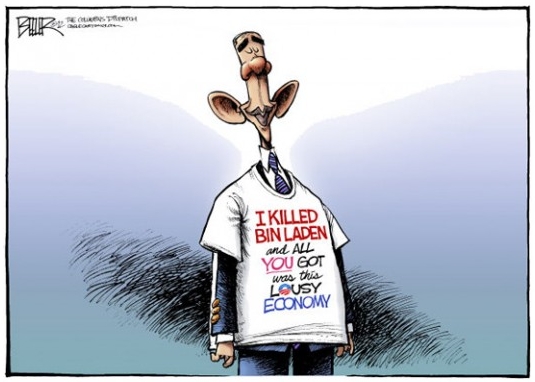
This Lousy Economy

I was reminded of when Jane was pregnant, and I told my father-in-law that I was thinking of getting her a present “Joe knocked me up and all I got was this lousy t-shirt” but she wouldn’t find that funny. He did, and we had a chuckle. The economy? I think it will take more than 4 years of Obama to fix the 8 years of Bush.

{ 1 comment }