≡ Menu

A guest Post –

In an earlier post titled The Domino Effect, Joe describes the buyout of Domino’s Pizza by Bain Capital and their subsequent exit that left Domino’s saddled with debt. Bain made out with a 500% return on their investment. Joe questioned if this transaction, and indeed many other transactions like this, show capitalism in a good light. Thought provoking questions like this seldom have easy answers. But it is also important to realize the important role these transactions play in a well functioning capitalistic economies. These kinds of transactions occur because on average they do create incremental value to the society.

The Force that Drives Capitalism

Capitalist society functions with a single credo: maximize shareholder wealth. Also known as profit. And profits accrue to those who take risks and create value. The risk taking and value creation is what keeps the society moving forward. If the appetite for risk taking or the profit incentive were absent, we will all be content with our lot and there would be no progress.

It is also worth noting that profit at any cost might work in the short run but it seldom does on a sustained basis. Society as a whole must benefit, which means some incremental value must be created, otherwise one or more stakeholders in the endeavor will refuse to participate. In other words, if you have a history of not doing right by the employees of the business you acquire, for example, they will find ways of making sure your agenda is not carried out.

The Role of the Private Equity

Private shareholders such as you and I buy stocks with the belief that the management will continue to execute their business growth strategy and create shareholder value. Private Equity firms on the other hand buy into a company either to turn it around, or to inject fresh management ideas that will generate additional growth. They believe that the opportunity exists to create value on a larger scale than what the current management is capable of doing. This is a much greater risk to bear since more capital is at stake and the PE firms are stepping into a business as outsiders. Consequently, the rewards of a successful execution, if they come, are larger as well.

In the case of this particular example, Bain did lead Domino’s to an unprecedented growth spurt in the 12 years of their ownership. Domino’s added new franchises and expanded internationally. New jobs were created. For their troubles, Bain walked off with a take of $2.3 B after investing $385 million of their own cash and the company at the end was left with a business that was self sustaining. While the $1.5 B in debt for Domino’s after Bain exited could be termed excessive, it is worth noting that the economics of the Pizza business can support this capital structure due to the fact that there is tremendous cash flow and the cash turns over very very fast. For another company in a different industry where there may be a larger lag between initial cash expenditure and the return of cash through sales, this capital structure could indeed be lethal and I have no doubt that the lenders would not have allowed Bain to borrow so heavily.

And while we are used to thinking about debt as something to avoid as much as possible, the fact is that debt remains a cheaper way to finance a business. It is much cheaper to borrow than to issue equity and the companies have a fiduciary duty to their existing shareholders to use debt in the levels that is appropriate for their business. A software/internet company may not want too much debt as technologies change rapidly and the barriers to entry may be quite low. However, a business making a product that is not going to be out of fashion any time soon and where branding and capital investments create barriers to new entry should always use a reasonable amount of debt that their economics can support.

The Rewards are Commensurate with the Risk

It is easy to own businesses these days. You and I can just open up our Zecco Trading accounts and buy and sell stakes in a company as we please. At the slightest possibility of capital loss, we can exit our positions at the click of a button. A Private Equity firm faces a different type of risk. When they purchase a business, their capital is tied up for extended period of time. Many years, maybe even decades, may pass before their investment and any profits can be recouped. There is a significant lack of liquidity and the possibility exists that entire investment might be lost if the transaction does not work out as planned. The rewards need to be sufficient to entice someone to take this level of risk to perform this essential role in a well functioning capital markets.

Ultimately, Private Equity is the garbage collector and the recycler of businesses, taking on the risks that no one else wants to take on. If they did not do what they do, businesses may not get a lifeline to restructure and become profitable, or in other cases they may continue to prod along with unrealized potential. This leaves the society poorer.

About the Author: Shailesh Kumar writes about value stocks at Value Stock Guide, a popular site devoted to value investing.

{ 8 comments }

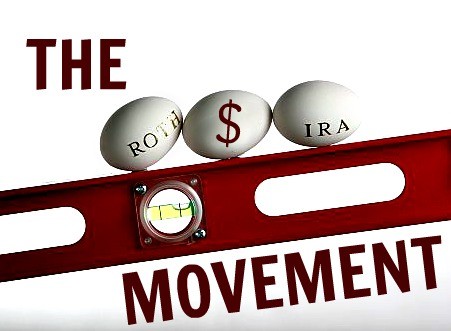
The Roth IRA Movement

Today is a special day in the world of Personal Financial Blogging. As my regular readers know, I’ve expressed mixed feelings about the Roth IRA. When I read articles telling me that a couple converted a million dollars to Roth, slamming themselves into the top bracket (35%, and possibly higher, through the effect of AMT) and then financing the tax due, I realized that some sanity was in order. Level headed discussion about how to best benefit from this type of retirement and not go too far in the other direction. I realized that far more discussion was in the future than I’d want to write in one place as I’m trying to maintain a variety of topics here. So, I planned to launch RothMania, a new blog dedicated solely to the Roth IRA and Roth 401(k) and how they can help you reduce your lifetime tax bill.

Today is the launch of the new RothMania site. Coincident to this, Jeff Rose of Good Financial Cents has coordinated The Roth IRA Movement a day in which Personal Financial Bloggers are all writing articles on the Roth.

At RothMania, to celebrate the occasion I’ll be giving away copies of Ed Slott’s The Retirement Savings Time Bomb. All you need to do to be eligible is ask your question regarding the Roth IRA.

If you are new the Roth, Let me start getting you up to speed. The Traditional IRA typically is funded with pre-tax money. If you are in the 25% marginal bracket, this means you are out of pocket $3750 in order to put away $5000 into your IRA. It grows tax-deferred, but is then taxed on withdrawal. The assumption is that you will be in a lower bracket at retirement and therefore save money. That said, the Roth IRA is the mirror image of this. A Roth lets you deposit money you’ve already paid tax on, but then the growth and eventual withdrawals are not taxed again.

That simple, Joe? Uh, hardly. You see, both flavors of IRA have Phaseouts, where for the traditional, you may not be permitted to deduct the IRA deposit from your income, and for the Roth, where you can’t deposit at all. Then there are the choices that come with being able to convert the traditional IRA to Roth, and the tax implications of these conversions. In the end, there’s no “one size fits all,” but there is a best strategy for each individual situation, and that’s what needs to be determined on a case by case basis. Let’s look at a short few examples of the IRA no-brainer, the times it’s not tough to decide what’s right.

  • You are just above the AGI limit ($112K MFJ, $68K Single) for a Traditional IRA deduction. Time to make that Roth deposit.
  • A dependent child has low income, and would otherwise have no tax due. She can deposit up to the lesser of $5000 or her total income to a Roth, and jump start her retirement savings.
  • A retiree, single, with a 2012 taxable income of $25,000. She can convert from Traditional IRA to Roth enough to get her taxable income up to $35,350. This would tax the difference of $10,350 at 15%, and avoid the potential of having ever increasing RMDs put her into the 25% bracket.
{ 4 comments }

This Week’s Roundup

This week we start with the remarkably prolific Miranda Marquit’s article How to Rollover Your 401k to an IRA, an excellent overview of this tricky process.  The only minor point I’d add the her article – if you wish to convert from the 401(k) to a Roth IRA, it’s preferable to first transfer to a traditional IRA. This lets you accomplish two things. First, a controlled transfer, the ability to convert just enough to keep from getting into the next bracket. And second, you will have the ability to recharacterize should your investments tank, or your income increase enough that you are above the bracket change.

Mr Money Mustache tells us Why I am SO Not Buying an iPad 3. While my high school English teacher would cringe at the use of “so” to mean something like “really,” I understand why the Mustachian is not getting the latest iPad. He had enough gadgetry in his life. I have it on my wish list. By the way, Apple has rebranded this product line. The latest iPad is not being called iPad 3 or iPad HD. It’s simply being called “iPad.” Me? I’m waiting for the Apple store to have it in stock, no lines, no waiting.

At Money Help For Christians Craig Ford answers the questions Is Credit Card Usage a Sin? Are Credit Cards Unbiblical? Craig offers a fair look at this topic, and reaches the same conclusion as I do when it comes to card usage.

At Darwin’s Money, a discussion of What’s Your REAL Inflation Rate? Everyday Price Index. Darwin looks beyond the numbers our government announces and instead, analyzes his person CPI. Let’s just say that a 42% jump in his health care costs really impact his numbers.

We’ll wrap this week up with Hank Coleman’s Top Ten Reasons To Own A Roth IRA. I love this top ten list. With one minor correction I left in a comment, this was a great list and if you don’t yet know what a Roth IRA is, here are ten reasons to learn.

Tune in this week, on Tuesday March 27th, the Roth Movement takes place across over 150 financial blogs.


{ 0 comments }

The Media on Mike Daisey

Just Thursday I rambled about a few things and the Mike Daisey story was among them. It was enough of an issue in the press that it made the political cartoon page. This real question is whether it will hurt Mike’s career or is any press, good press?

{ 0 comments }

Rambling Today

Today, I get to ramble. completely unrelated items, each of which I’d not go on about for too long. Ready?

My Well Done Burger

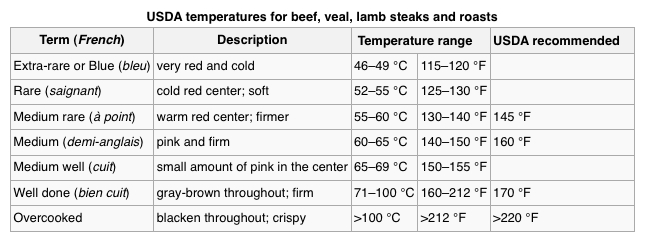
I’m in a restaurant with a friend (hey, I’m going to say something nice, so I’ll tell you, it’s a local small chain called The British Beer Company) and I ordered a Wensleydale Burger. Never heard of Wensleydale cheese before, but the waitress said it was popular. The punchline? I had to tell the waitress that every burger I’d have for the rest of my life will pale in comparison. I ordered medium rare, got medium rare, and the cheese and onion topping was just great. So why I am sharing this chart pulled from Wikipedia? Because last weekend, I took the Janes and J2’s friend to a local pub, and ordered a burger. I ordered medium rare, and the waitress kindly offered “the chef really undercooks, so if you want medium rare, just order medium.” There’s a word for this, I’m sure, like how American  sizes keep shifting to make fat men and women feel better. I get the burger, and it’s gray inside. So we’re talking “well done.” Instead of a bit undercooked, it was two levels overcooked. I’m not sure why, but Jane thinks sending anything back to the kitchen, except bleeding chicken,  is “making a scene.” It took so long for the food to come out that I ordered a second beer before the food was served. We ate the meal, and along with the check, the waitress delivered the beer. Politely saying, “uh, we’re leaving, and I’m no longer thirsty” is still scene-making so I paid the bill, drank a bit of the beer and left. I have no idea why I am sharing this today. Next time, I’ll drive a bit and go to where they know how to cook a burger. How bad must an order be for you to return a restaurant meal? Should I have quietly returned it?

Mr. Daisy and the Apple Factory

Mike Daisey is not a journalist. Mike Daisey is not a reporter. Mike Daisey does monologues on stage and for purposes of his performance, accuracy is not graded. On PRI’s “This American Life” Mike repeated portion of his stage performance “The Agony and the Ecstasy of Steve Jobs” in which he exaggerates, piecing together bits of his trip to China along with his observations and hearsay to come away with a story that is not journalism. The punchline is that he makes the working conditions in the Chinese factory making out iProducts worse than reality. A brief tangent – “I remember landing under sniper fire. There was supposed to be some kind of a greeting ceremony at the airport, but instead we just ran with our heads down to get into the vehicles to get to our base.” –Hillary Clinton, speech at George Washington University, March 17, 2008.  — This is Mrs Clinton’s quote from the press. It seems she had some faulty memories as no one there confirms any shooting at the time. It made for great theater and accusations she was lying.
Let’s cut Mike some slack. It was great theater. The audio has been taken down, but you can still read the transcript. Have you heard the show? It aired the week of January 6. As Mike describes the journey to the factory he offers “Everything is under construction. Every road has a bypass, every bypass has a bypass. It’s bypasses all the way down.” Am I the only one who hear this line as a reference to the expression “turtles all the way down“? Can’t be, someone must have caught this besides me.

The Path to Prosperity

The House Budget Committee advanced a 2013 resolution calling it The Path to Prosperity. At 99 pages, it’s slow reading. It proposes to remove the AMT, which is probably a good thing as it ensnares those it was never intended to. There’s also a plan to reduce the current 6 tax brackets to a simple 2, just 10% and 25%. This is as far as it goes, it doesn’t offer any insight as to the income level these two rates start, nor does it discuss exemptions or deductions, not that I could find. As always, the devil is in the details, and in this document, the details are lacking. I’d be curious if there’s a much more detailed plan that will be voted on, and we’ll only have access after it’s passed or rejected. If the details show a simplified code with lower rates, fewer deductions, etc, it may be a good plan, I’m keeping an open mind.

That’s it for today. Enough Rambling for a while.


{ 0 comments }