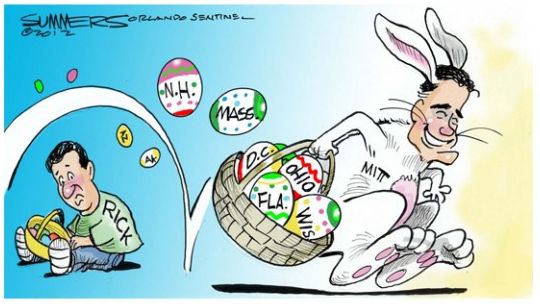
This is how the race seems to be looking for the Republicans right now. But, the question remains, is he really electable?
This is how the race seems to be looking for the Republicans right now. But, the question remains, is he really electable?
If you have no kids and don’t plan to, this may not be the riveting reading you expected today. Sorry. Today, we’re talking Kiddie Tax. I was this close (holding thumb and index finger very close) to titling today article “Hello Kiddie Tax” but readers advised than puns are the lowest form of humor and I aspire to a high level.
First, it stands to reason that few of our kids will be in a higher bracket than their parents. Exceptions, I know, but follow me. Long ago, parents took advantage of shifting wealth to their children and grandchildren. The fact is, you can gift anyone you like up to $13,000 this year and there are no tax consequences to doing so, in fact, there’s no form required at all. Since each parent can gift $13,000, that’s $26,000 a couple can pass to each of their children. As that pile of transferred wealth grows, it’s most likely to give off some income, whether it be interest, dividends, or capital gains within the account. The government wised up and implemented what is now fondly called the Kiddie Tax.

Simply put, the Kiddie Tax does not apply to earned income. For earned income, your child has her own standard deduction, and pays marginal rates starting at 10%, just as you or I would. The tax kicks in when it comes to unearned income. What we have in 2012 is the fact that children’s unearned income in excess of $1,900 will be taxed at the parents’ rate. To be specific, $950 isn’t taxed at all, and the next $950 is taxed at the child’s rate (presumably 10%), but after that, it’s the parents’ marginal rate for any money above the $1,900.
It may take a bit of planning, perhaps investing in non-dividend paying stocks, or shifting some of the funds into a Kiddie Roth, up to $5000 or the child’s earned income which ever is lower. Whether you are able to navigate around it or not, better to avoid the surprise this tax can spring on you.
I have readers from all over the world. Now and then I’ll host a guest post that may appeal to a non-US reader, here’s one such guest post –
PPI, or Payment Protection Insurance, is a type of insurance that is sold by lending companies like banks or building societies. A building society is an institution owned by members who offer financial services. Building Societies as found mostly in the UK.
There have been investigations into PPI claims in the past several years that have shown the selling of these payment protection options has often been misrepresented and to many unsuspecting customers. Because of these investigations, many people are successfully applying and receiving PPI claims.

The coverage in this type of insurance is purported to protect the buyer in the event of unemployment or sickness or accident. The insurance is to protect the debt until it can be re-assumed. PPI can be good for many people, but not for everyone. Too many lenders have sold the insurance without explaining about it. The price was just added to the amount of the loan and no further explanation was given. Now that this practice of mis-selling payment protection insurance has been exposed many clients who unknowingly purchased this protection are able to reclaim PPI monies.
If a client has borrowed money from a lending institution, he may have been sold PPI without knowing it. What is more important he submit a PPI claim to recover the cost. Many who bought PPI knew what they were buying. But there are enough concerns that it pays to check into it. It’s simple to determine if a client might have been sold a payment protection insurance plan and to learn how to submit a PPI claim and receive a refund.
The client should never be told that PPI is mandatory. This type of insurance is available but certainly not mandatory. If the client is told that buying this insurance will increase the chances of getting the loan, which is a misrepresentation of the facts. PPI should in no way determine qualification for the loan.
If the terms of the loan were not expressly clear, the cost of the protection insurance might have been added to the total without the client realizing it. There are several other considerations that might indicate wrong-doing. Often the elderly are preyed upon in financial matters, as are the self-employed and the retired. If you were in one of these categories when you borrowed money, it is a good idea to find out more about how to reclaim a PPI. One of the most important items to consider is whether or not there was any pressure about buying PPI.
About The Author: My name is James I am a Tech writer from UK. I am into Finance & Insurance 🙂 and also enjoy playing with latest gadgets catch me @financeport
Earlier this week, in an unprecedented example of Personal Financial Blogger cooperation, nearly 150 of us accepted Jeff Rose’ invitation to write about the Roth IRA and promote the cause on twitter with hash tag #RothIRAMovement. It was quite a success, and Jeff got some well deserved recognition, from Reuters Can Twitter make Roth IRAs trendy for young? The Huffington Post Roth IRA Movement Takes To Twitter, and The Wall Street Journal’s Happy Roth IRA Day! Wow, what great press, congrats, Jeff. My own effort went to the launch of RothMania, where I’ll focus on this particular flavor of retirement account.
At Enemy of Debt, Ashley guest posted, 10 Things on Which to Never Spend Money. With everyone trying to get us to part with our money, this is a great list of things to avoid. My favorite on the list? “Anything a telemarketer is selling.”
Financial Samurai asks What Would You Do If A Major Income Source Went To Zero? and explains the importance of income diversification. Not too many people have more than their day job as income, I imagine. It’s never too late to start thinking about this important topic.
At Out Of Your Rut, Kevin tries to understand how someone can be Struggling on a Six-Figure Income. The media has offered stories of those earning far more than this ($350K, anyone?) yet they manage to burn through every cent. Sympathy? Not too much from me.
Remember how Al Capone was finally caught by the law? Tax evasion! Even if you are in an illegal business, you are not exempt from paying taxes. So my frugal tweep, Sandy at Yes I am Cheap shared Nine Tax Deductions That Prostitutes Can Claim. I’m not judging, just passing along what appears to be good tax advice.
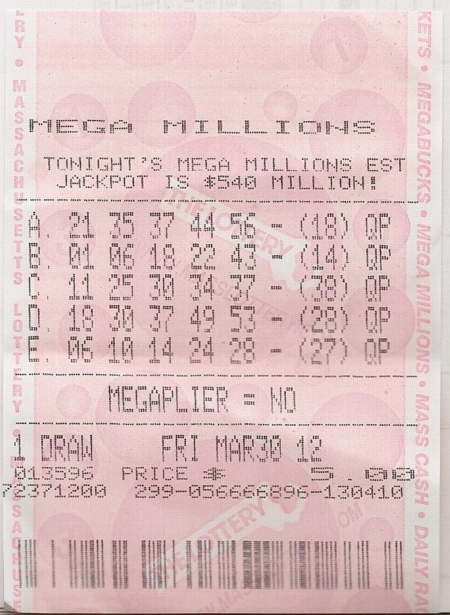
And to wrap up a great week, Why I Played the Lottery Even Though I Know It Is Such a Horrible Idea, from Kevin at No Debt Plan. By the way, the lottery was worth $640 million dollars, I played too. I didn’t win.
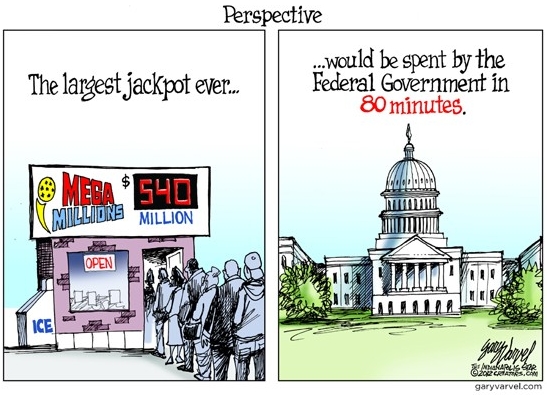
Last night’s lottery in the US was well over a half billion dollars. But, let’s put things in perspective.