≡ Menu

Following is a guest post from Scott Desind.

If you’re like most people, you’ve been caught speeding at least once. Whether or not that resulted in a ticket, there’s a lot more going on behind the scenes than you know. As the most common form of public citation, the speeding ticket has a long and interesting history. They’re also big business in some states.
Here are some surprising facts you probably didn’t know about speeding tickets:
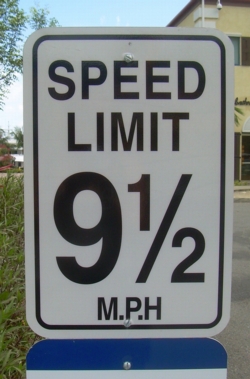
      1. One of the first automobile speeding tickets that we know about was given on February 8, 1910. It was given to the wife of the Canadian Prime Minister for going 10 miles per hour over the speed limit.
      2. More men receive speeding tickets than women.
      3. More women will attempt to contest a speeding ticket than men.
      4. Drivers between the ages of 17 and 24 get the most tickets. (OK, maybe that one’s not a particularly surprising fact.)
      5. An average traffic policeman costs a city $75,000 per year in salary and benefits. That same traffic policeman makes a city an average of $200,000 in ticket fines.
      6. When a city falls on hard times, they turn to traffic violations for revenue. A 10% decrease in economic growth leads to an average 6.5% increase in the number of speeding tickets issued.
      7. Around 35 million speeding tickets are issued each year in the United States. That works out to about 93,000 tickets each day, or 65 every minute.
      8. Ohio writes more speeding tickets than any other state in the nation. Pennsylvania, New York, and California are next on the list.
      9. Per capita, however, the states most likely to issue tickets are Washington, D.C., Wyoming, Vermont, and North Dakota.
      10. The highest speeding ticket fines take place on the I-95 corridor on the east coast, going from New England down to North Carolina.
      11. In 18 states, judges can actually add jail time to a speeding ticket’s punishment.
      12. New York State brings in about $76 million every year in traffic tickets.
      13. Among professionals, doctors are more likely to get a speeding ticket than any other profession.
      14. Paradise Valley, Arizona, was the first place to use photo-based radar for speeding tickets.
      15. The average fine for a speeding ticket in the United States is $150.
      16. The average increase in insurance premiums after a speeding ticket is $300 per year. That’s an additional $10 billion in the pockets of the insurance companies.
      17. The fastest speeding ticket in the United States was issued in Texas in 2003. A Koenigsegg CC8S was clocked at 242 miles per hour in a 75 mile per hour zone.
      18. In some European countries, fines for speeding tickets are on a sliding scale, based on income. For example, in Germany the fine for a speeding ticket can reach over $15 million, based on the violator’s income.
      19. Be careful when traveling. Drivers from out of state are 20% more likely to get a speeding ticket than residents of the state.
      20. Radar speed detectors are far from perfect. It’s estimated that about 15% of tickets backed by radar are in error.
      21. Around 95% of people who receive a speeding ticket simply pay their fine via mail. Only 5% wind up in court.
      22. Less than 1% of people who attempt to fight a speeding ticket on their own win. Those who hire an attorney have a little bit more success, with 5% winning their case.
      23. Lawyers are making a killing trying to fight speeding ticket. Lawyers are hired to fight around 180,000 tickets each year, at an average cost of $150 a pop. That equals $27 million in legal fees – which most often still result in a ticket.
      24. In some states, errors on a ticket can get you off. The errors have to be glaring, however. For example, misspelling your name slightly won’t get you out of a ticket – as long as the officer can identify you in court. Listing your name as “Herm Johnson” when it’s actually “Emilio Young,” however, can lead to the ticket being thrown out.
      25. There are some acceptable reasons for speeding. For example, you are allowed to exceed the speed limit (within a certain range) when passing another car. Also, if you’re being chased by another car and are afraid for your life, you may be excused from speeding.
      26. Policemen do usually show up when you contest a ticket. There’s a myth out there that says the officer in question will miss the court date about 30% of the time. In fact, this almost never happens. Less than 1% of contested tickets are thrown out because the police officer didn’t show up.

The next time you get a speeding ticket, remember you’re part of something much larger – and much stranger – than you ever knew.

Author bio –

Scott Desind is a Los Angeles traffic ticket attorney, helping drivers in the Los Angeles area get their driving tickets dismissed. With over 20 years of combined, Scott Desind and his Traffic Attorneys  have a 90% success rate in beating tickets.


{ 18 comments }

A Spring Ahead Roundup

I’m surprised that Social Security isn’t a more widely discussed topic than it seems to be. All kinds of investing advice, retirement planning with 401(k) or IRAs, but not as much focus on Social Security. Maybe I’m just not looking hard enough? Either way, it my pleasure to start this week’s roundup with 7 Secrets Social Security Won’t Tell You, an article by Maggie at Square Pennies. One of the ways i judge whether an article is worth a mention is to decide if I learned something new from it. In this case, I learned quite a bit. For example, I didn’t know that one needs to be married for 10 years to collect a benefit on the spouses earnings if they divorce. Nice job, Maggie, and a worthwhile read.

At Money Rates, I read Is inflation making a comeback? I wonder about any premature sightings of inflation. Inflation is measured by rising prices, of course, but its true momentum has to be demand driven. In other words, “too much money chasing too few goods” as classic definition is what I subscribe to.
The rise in oil prices is actually deflationary, as it throttles other activity. Less vacation travel, less pleasure driving, etc. In fact, Walmart statistics show that rising gas costs reduce their store activity. A drop in gas prices to sub-$3 levels could actually be the catalyst for improving consumer confidence that actually does spur more spending and demand driven inflation.

My Money Design asks Is 2 Percent the New Safe Retirement Withdrawal Rate? If so, we are all in some serious financial trouble. Most of us who actually do a bit of planning have used 4% as the safe withdrawal rate when determining our “number.” That number is tough to reach and doubling it means retirement is even further off.

Miranda answers the important question Can You Still Do a Roth IRA Conversion in 2012? And I won’t ruin the punchline, you’ll have to head over and read her article for yourself. The use of IRAs and Roth can help you save quite a bit on your total lifetime taxes, great to understand these accounts.

Ginger at Girls Just Wanna Have Funds (Ha! I love that blog name) wrote 3 Reasons Why Your Home Is A Crappy Investment. I think she got it right, and more so, summarized it in a brief article. I think it would take a book of analysis, 295 pages at least, to come to the same conclusion. Save the $24.95 and read this article.

In the oddest post I read this week, Shawanda Greene discusses the License to…Steal? It’s a strange series of how people rationalize that stealing is okay in certain situations. Me, I’d rather earn every cent, but to each his own. An interesting insight into what others are thinking as they steal.

After looking at all the restrictions there are on the use of your home and property. Kevin at Out of Your Rut asks Do You Ever REALLY Own Your Home? His point is well taken, there are many things you can’t do due to zoning issues, and you still have property tax to pay. In many cases, the property tax alone is over $10,000 per year. So in a sense, sure I own it, but it’s still not ‘free and clear,’ it will always be an expense.

Today’s roundup title come from the fact that in the US, we move the clocks forward an hour during the night (2am to be precise). We lose an hour of sleep, they say, but not me, I’ll sleep an hour later. We do gain an hour of light at night but give it up in the morning. By the way, it’s daylight saving time, not “savings” even though everyone seems to say that.

{ 4 comments }

The Next Next iPad?

This week, Apple introduced the next generation iPad. It added some incremental features including Retina Display (this references the fact that your eye can only distinguish a certain pixel density, any higher densities are unnoticed) as well as LTE connectivity. Unfortunately, no Siri on iPad just yet. A perhaps minor twist to this story, is Apple did not number this iPad 3 or even name it iPad HD. So, if you are buying any iPad on the internet be sure you know your you’re buying. Is an electronic implant in out future? Tough to say. I can imagine some intelligent glass lenses that have built in augmented reality, along with face recognition. Imagine meeting someone for the second time and never worrying about remembering their name.  You look their way and the name pops up in front of your eyes along with any other key details. I’d like a pair of those glasses.

{ 0 comments }

A Dog Day Roundup

An article Arrested for breaking the law of large numbers caught my eye this week. Have you heard the financial talking heads go on about how large companies’ growth must slow due to the Law of Large Numbers? It’s a complete misuse of this phrase and this article does a great job to explain why.

As we get closer to tax day in the US, April 17th, it’s only appropriate to share Kay Bell’s Wild, wacky and illegal tax deductions. Now that Jane 2.0 (my daughter) has convinced us to buy a dog, it’s timely to find out he doesn’t come with a tax deduction for us. Too bad.

Nelson Smith guest posted at Canadian Finance Blog about The 9 Biggest Rip-Offs Ever. I don’t know if it should count as ‘biggest’ but I agree with Nelson that the movie popcorn is up there. I know what the signs say, but I still pack my own snack to go see a show on the big screen.

Reuters asked the rhetorical question, Who could be against Obama’s tax break on RMDs? Last month, congress was going to tinker with the beneficiary rules on IRAs (not good), but the 2013 budget had this buried perk in there.  Retirees with less than $75,000 in their IRAs might be able to void a required distribution.

Clever Dude wrote Don’t let your kids grow up to…work from home. An interesting take on why the office cube might be missed if you’re working from home.

My Friend Neal Frankle asks (and answers) Should You Create an IRA Trust? Of course, it depends. The trust is a great way to throttle the withdrawals if the beneficiary is bad with money, and an even better way to avoid the tragic mistakes an uninformed beneficiary can make.

At Couple Money, Elle explained the difference between Tax Brackets (Marginal Rate) and Effective Tax Rates. Many still don’t understand the difference, and Elle explains it in a way that should leave no doubt.

A personal note on today’s post title – a few weeks back, our daughter presented a Keynote Slide Show, multimedia style, on why she deserved a dog. Part of my agreeing to it was that she write a few posts for me, first describing her approach and, after we pick up the dog, an update on how the first weeks go. So, in few weeks, we will be a dog family. And I don’t even get a tax break for it.

{ 4 comments }

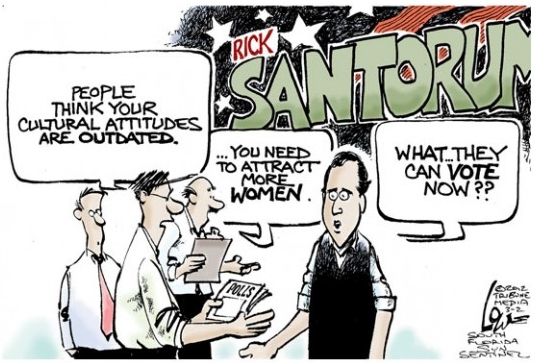
Santorum on Women’s Suffrage

I am shocked that Mr Santorum has made it this far in the process. The GOP may look for anyone but Romney, but also not Santorum. I predict another candidate will be the Republican nominee.

{ 1 comment }