
A source of untaxed income, the underground economy is bigger than you think. An infographic shared from my friends at TurboTax –
Free Tax Filing, Efile Taxes, Income Tax Returns – TurboTax.com
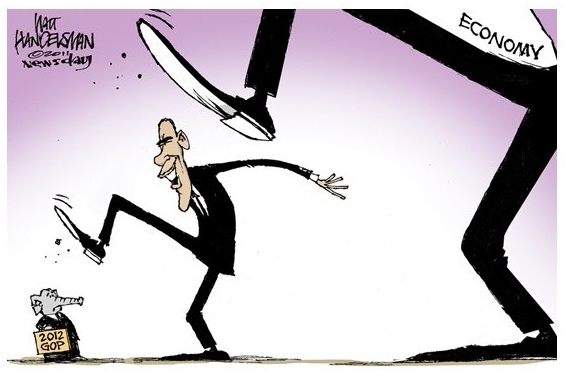
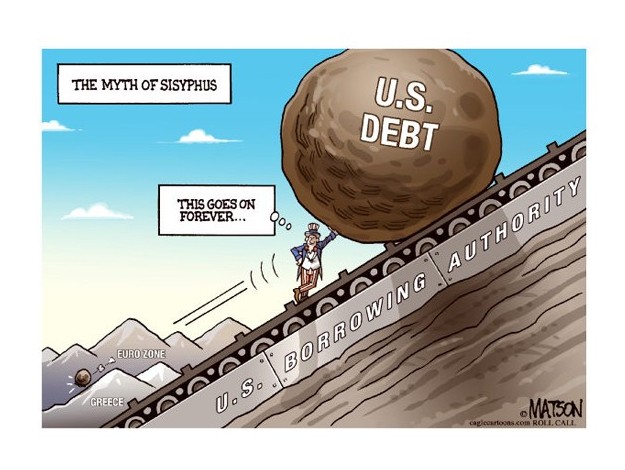
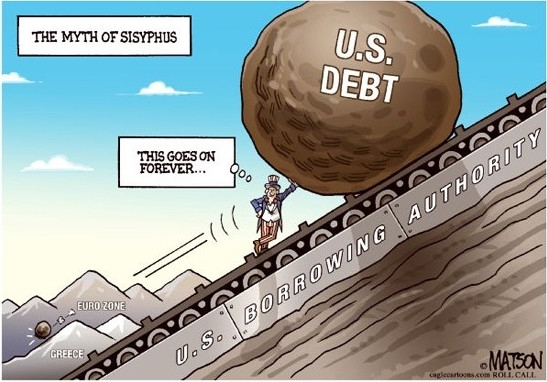
A few days ago, I saw a tweet that led me to read a CBS article Calif. commish advises teachers give up pensions. The article suggested that the state could no longer afford to pay out on its pension obligations and that changes would have to come. It went on to say that after teaching 35 years, a teacher could expect to get 80% of her salary as a pension each year. Wow! Sign me up, who gets a pension like that in this day and age?

Wait a second. There’s one not-so-minor detail the article conveniently overlooked. These teachers are not in the Social Security system. Another minor oversight – according to a CALSTRS (California State Teachers’ Retirement System) report the teachers still pay in 8% per year of their own money to their pension plan. Now, forgive me, but it’s time to do a little math. In the normal system, one’s employer pays in 6.2% of the employee’s salary to Social Security. Companies’ average 401(k) match is about 3%, but for sake of round numbers let’s assume California puts in a total 8% even, just matching the 8% coming out of the teacher’s pay. So we have 16% per year saved. I pull up a spreadsheet, which will adjust for inflation right till retirement, and enter 16% as the percent saved, a 3% inflation rate, and just an 8% return each year. (Note – Dave Ramsey says I can enter 12% rate of return, but I’ll stick with the 8%) After 35 years, we have 14 times the last year’s income as the amount saved in the retirement account. At 55, an immediate annuity will return 5.82% for a woman (more for a man, we don’t live as long) and to finish the math 14 x 5.82% is…… drumroll…. .816 or 81.6% of final income. No smoke, no mirrors, and just a lousy 1.8% match. My employer gives us 5%, many give more.
What’s ironic to me is that if new teachers simply got this 16% deposited to a private account there’s a great chance they’d actually come out ahead of that 80% income replacement. It comes down to a question of defined benefit vs defined contribution, who will take on the risk? But reflect carefully on the numbers, these teachers aren’t getting a windfall, not by a longshot. Perhaps the author of the CBS article should get, as Paul Harvey says, “The rest of the story.”
Some weeks there seems to be a common theme, whether it’s kids, mortgages, spending, retirement etc. This week no one topic seemed to dominate my reading. So let’s start with Free From Broke’s Extreme Couponing: Do You Really Save or is it a Waste of Time? – I have my thought on this, in any process, there’s often the “low hanging fruit,” the easy thing that pays off. So it goes with couponing. You might rifle through the Sunday fliers and in 5 minutes find $20 in savings. But the next units of time will probably yield less and less, to the point where it makes little sense. The point of diminishing return.
At boomer and echo, a nice piece on Why I Love Shopping At Costco, as he points out some of the pros and cons of warehouse store shopping. As Echo says, some love it, some hate it. Ok, I’ll ask – for those who hate it, why not just get your membership fee back and quit? No one should go to Costco who hates it. I’d rather be in a store where people are all happy to be there. As far as the limited selection goes, I wrote a review of The Paradox of Choice that discussed how too many choices of anything is actually a bit unsettling, and itself a time waster.
Jim Yih writes at retire happy blog, and this week he asked his readers Do you BELIEVE you can become wealthy? He explains why your answer either positive or negative is likely to be correct. A good read, to be sure, but a necessary one if you are a nay-sayer.
Guest Posting at Million Dollar Journey, Frugal Trader asked Can One Save Too Much Money? Given the sad state of the average retirement accounts in this country, I’ll say that such things are possible, but rare, and only known in hindsight. In the struggle to avoid running out of money during retirement there are those who leave millions on their death. It’s not like any of know when we’ll meet our maker. Tough to plan.
On the topic of mortgages and more to the point, those that are underwater (this means that the homeowner owes more that the value of the house, which is now getting more and more common in the states) Len Penzo suggests If It Feels Good Do It: Maybe Strategic Defaults Aren’t So Bad After All and explains why, which if you know Len, is a bit sarcastic and makes the opposite point. I have my own opinions on the topic, my own post soon to be published.
10 Ways to Stay Poor Forever is a guest post at Budgets are Sexy. One of those posts that tells you just what not to do, a personal sharing of Elise Adams and her husbands bad money moves over the years.
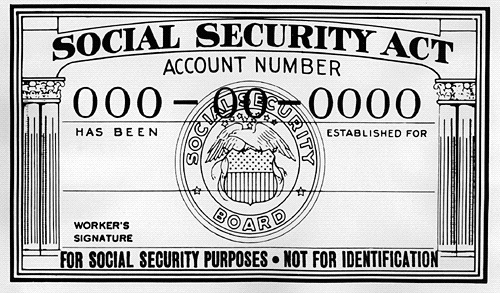
And last, Khaleef Crumbley of KNS Financial guest posted 3 Common Mistakes To Avoid When Planning Your Retirement at Bible Money Matters.The one that really caught my eye was to not rely on Social Security. The numbers may have changed slightly, but when I wrote an article Social Security Benefits last year, a $50K/yr worker (The US median) will see a full benefit of $21,000, 42% of his income replaced by Social Security. If the target is to replace about 80% of one’s income, this is more than half of that. Part of me agrees that it’s dangerous to count on this money being there, yet, if it’s not, I can see some serious consequences to the economy and the credibility of our government.