≡ Menu

Your Student Loan

A Guest Post –

After graduation, most loan companies give you a six-month grace period and then expect you to start paying back your loan. The repayment plan is usually set to a ten-year schedule. If you have the money to pay the loans back, this is generally the best way to avoid high interest rates and pay down your principal. Most struggle with this type of repayment plan. Fortunately, there are ways to alleviate your monthly student loan burden. The first thing you will want to consider is loan consolidation. Consolidation allows you to pay one amount each month instead of sending payments to several different loan companies. It also gives you the option of lengthening your repayment schedule so you can pay back less money each month. Be aware that you will inevitably pay back more interest over the life of the loan using this method. Several different loan repayment options are now available.
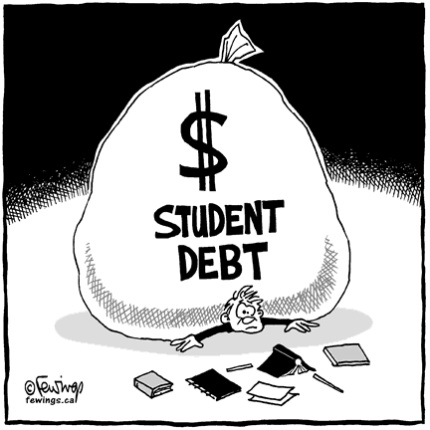
The government offers an income based and income sensitive repayment option for those with federal loan debt. These plans calculate the amount you owe based on your monthly income and number of dependents. It is not uncommon for some to have a monthly payment liability of zero while on these plans. In addition, loan holders who work for a government or nonprofit agency may qualify for loan forgiveness after 120 consecutive monthly payments. Finally, there are other more drastic options out there for those who qualify. Deferments allow those who are unemployed, in school, or under a financial hardship to postpone payments for up to six months at a time. Remember that defaulting on your student loans will only mean trouble down the road. Even bankruptcy won’t allow you to get out of this responsibility. Before you default, call your loan company. They are usually willing to work with you on a repayment plan.

{ 0 comments }

A Safe Return Roundup

Some weeks there are so many good posts to share, it tough to know when to call the roundup done. Let’s get to it.

First, at Cesi Debt Solutions (by the way, they are a non-profit, I avoid including commercial sites in roundups) offers 10 Ways to Tell You’re Living Beyond Your Means. I like this list a lot, I’m just afraid those who need to see it may not realize it applies to them. I’m thinking you might just want to print it out and hand it to those who need an intervention. You’re not saving anything in your company’s matched 401(k)? You might want to brown bag your lunch the next few decades.

Next, at Passive Family Income, Alban wrote What the State of Your Finances Reveals About Your Personality, a discussion of how money impacts us emotionally as we grow up and still, as adults. It’s good to take a stwp back and think on these things now and then.

Next, a Canadian PF Blogger, Jim Yih who posts at Retire Happy Blog, asks (and answers) Does half your money go to taxes? There are many aspect of finance that are the same no matter where you are, our rate of taxation is unique to each country. If you think we in the US are overtaxed, why not read Jim’s take on his taxes?

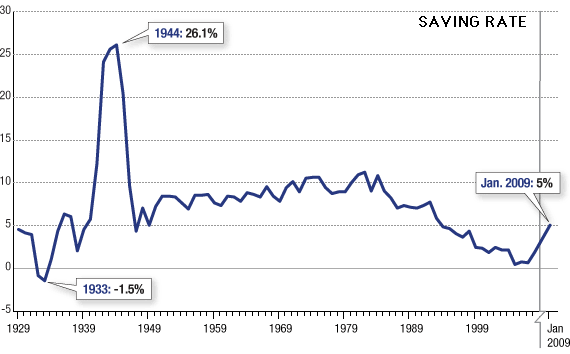
At My Money Blog, a wild result of a study: What Is A “Safe” Savings Rate? How About 16.62%. Since past results are not good at forecasting the future, I don’t know if I believe this, especially since in this study the goal was a 50% replacement of pre-retirement income. An interesting read, nonetheless.

The Oblivious Investor Mike Piper helps us understand When Should I Take Social Security Benefits? (Single Investor). Not to be selfish here, but I’m looking forward to the Married Investor version as last I checked the math gets a bit more complex when two are involved. Still, check out Mike’s great explanation of your options as retirement draws near.

The Tax Question: Save, Spend, or Pay Off Debt? was Kristina’s post at Dinks Finance.A fun thought, but I had to point out a dollar of tax refund is a dollar you lent the government interest free. My goal each year is to adjust my withholding to the point where I owe, just enough to avoid a penalty.

Let’s wrap up this week with Len Penzo, The 15-Year vs. 30-Year Mortgage Debate: Why 30 Is Better. Len offers a list of 8 factors to take into account, all of which point to the 30. Truth is, I could add at least 2 or 3 more thoughts to that list. The punchline for me is that the lower obligation reduces your risk, and you can always pay it off in 15 years if you wish, but on your terms. I’m with you, Len.

Joe

{ 2 comments }

Farewell, Elizabeth Taylor

This week, a living legend passed away. Elizabeth Taylor will surely be missed.

{ 0 comments }

A Good Roth Conversion

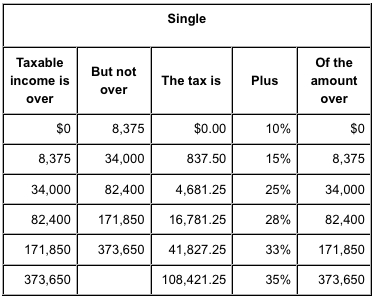
I’ve written about Roth Mania and will stick to my premise, that conversion to Roth makes sense for some people, not all, and rarely a whole conversion of all of one’s IRA balance. Today, I’ll share the story of a woman whose taxes I do. She is retired, a widow, and has an IRA with an otherwise growing RMD (Required Minimum Distribution.) The RMD is based on the number of years the actuarial tables say you have left on this earth. As an example, at 70-1/2, your first RMD is 3.6% of your IRA balance, at 75, it’s 4.4%, and by 80, it creeps up to 5.3%. This doesn’t seem too bad, but in normal times, if the market is growing at even a modest 6-7%, the balance in the account is growing as well, and the dollar amount you must withdraw at 80 may be two or three times what you had to withdraw at 70. Years ago, when I first did this woman’s taxes, I observed that she was in the 15% bracket and had about $9,000 or so before she’d hit 25%. So, each year since then, we’ve done a dry run of her numbers, and converted just enough to put her in the 25% bracket. When the final numbers are in, we recharacterize so the taxable income line precisely matches the dollar amount where 15% ends and 25% begins. Got that?

A graph over the years might be cool, but I’ll just offer the tax table from Fairmark, (my thanks to Kaye Thomas for the ok to copy it) a publisher of financial books focusing on taxes and retirement accounts. You can see above, in 2010 any amount over $34,000 is taxed at 25% , but the prior dollar was taxed at just 15%. This strategy of “Topping off” her 15% each year will keep her RMD from growing and forcing her into the 25% bracket. Also, the Roth balances will pass to her heirs on her death, tax free (she’s well under any estate tax concerns) but they will need to take RMDs regardless of their age. Any thoughts on this strategy, I’d love to hear from you.

Joe

{ 3 comments }

A March Madness Roundup

First this week, Earn More By Upgrading Your Resume, a guest post at Canadian Finance Blog. Some great advice that may help you land a new job.

Next at Canadian Personal Finance Blog (different site than above) we’re treated to a personal story “I found $1000 this weekend.” An interesting story that just shows you, you need to pay attention to your finances, it really is pretty easy to accidentally lose chunks of money you may not find.

Next, at Resume Mag, we have not just ten or even twenty, but 79 Sample Job Interview Questions.You don’t want to come off as too practiced for a job interview, but it can’t hurt to do your homework and be really for anything the interviewer throws at you.

At GenX Finance, Jeremy explains This is Why You Can’t Make Money in the Stock Market.To be fair, it’s more about why most don’t not why you and I can’t. Either way, worth reading.

Mike Winesburg tells us The Top 5 Drawbacks of Variable Annuities. I am pretty negative on VAs, so I was surprised Mike stopped at five, then I realized, this was just the top five. Fair enough.

To wrap up this week, What The Big Short teaches the little guy is a nice review of the Michael Lewis book, offered as a list of the lessons we investors should take away from the history of the financial collapse.

{ 5 comments }