
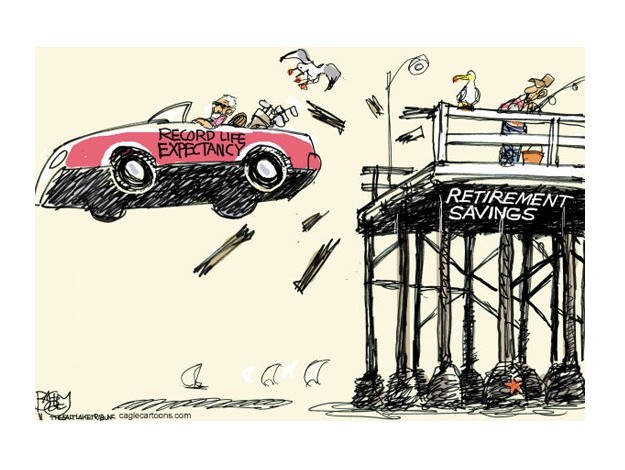
 This one needs no explanation.
Joe
In January, the Financial Crisis Inquiry Commission issued their final report, titled The Financial Crisis Inquiry Report.
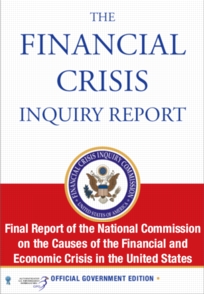
While I’d not want to ruin a good cliffhanger of an ending, the web site itself puts it conclusion on the front page:
The Commission concluded that this crisis was avoidable—the result of human actions, inactions, and misjudgments. Warnings were ignored. “The greatest tragedy would be to accept the refrain that no one could have seen this coming and thus nothing could have been done. If we accept this notion, it will happen again.â€
These words are encouraging, but I suspect the lessons learned here will soon be forgotten. Do you remember the Savings and Loan Crisis? I do. I was young, but bright enough to notice CDs from Lincoln Savings and Loan were not FDIC insured, not the ones they were pushing. Weren’t we supposed to learn our lesson then? The real question is whether our collective memory can last even a full generation. Will the next generation fall prey to the claim of this time being different?
This document is available as a (free) PDF download, and runs 662 pages. It’s organized in a way that makes it manageable and even interesting to read. I’m not betting, but let’s hope it’s really lesson learned this time.
Joe
That was the question on my latest TurboTax guest post, Should You Take the Standard or Itemized Deduction?
There’s quite a list of things can can be accumulated for itemizing, but remember, the standard deduction is $5,700 if single or $11,400 married, so many don’t exceed these numbers. But, here, I’d like to offer a different spin to those who just miss by a bit. The concept is to bunch your deduction in a way that will put you over the standard deduction every other year. Say your deductions (assuming married) add to $10,000 and you are just missing being able to itemize.
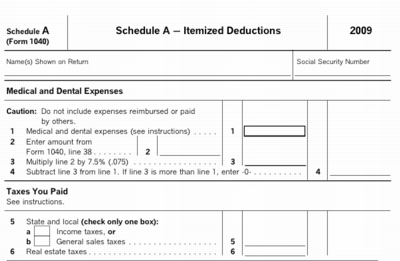
There are three items that you can shift a bit, First, your mortgage payment. In odd years (we’re going to try to make the odd year the one where we itemize, got that?) make the next January payment in December, then in the next year, the even one, be sure not to do this. If your interest is averaging $500 per month, you’ve managed to shift an extra $500 into the itemizing year. Next, the property tax bill. It’s usually not calendar, ours is July-June. So in odd years we can just make the Q1 payment from the next year a month or so early. While the median annual property tax is barely $2000, this strategy will still help you add another $500 to the odd year. If you aren’t afraid of being a bit late, paying the 4th quarter payment on Jan 2nd will help more. You may have a small late fee, ours is 1.5% per month, but if it makes this deductible, it may be worth it. (Careful, if you have a mortgage, the bank won’t like to see a late tax payment, just stick with the pay early.)
Last, and easiest to manipulate is the charitable deductions. For the generous among us, you can put some money in your pocket and keep up your kind philanthropy. Just keep 100% of your donations in the odd years. If you are donating $4000 per year, this strategy would have you make the same $4000 donation in both January and December of the odd year. Now, instead of just $10,000 in the odd year, you have $15,000 in itemized deductions. $3600 over the current standard deduction and a resulting tax savings of $900 if you are in the 25% bracket. Even the $540 you’ll save if 15% is still worth this slight effort. Really, it’s no effort, just a bit of change to the dates you’ll write these checks.
Joe
This week, Tom Drake at Canadian Finance Blog wrote about 10 Ways To Save Money On Groceries. Some of the suggestions may stand to reason, but I bet you find a few you can implement and start to save. One thing I’d add to Tom’s list – sales (in the US, anyway) seem to run in a six week cycle. So when that boneless chicken is on sale, no need to buy more than you think you’ll eat in six weeks, otherwise you may be eating six month old freezer food. Edible, but not great.
Monevator talked about The one number to beat if you want to retire early. We’re all so focused on “The Number” that magical amount you must have saved in ored to retire, we may be missing a bigger picture. An article to get you thinking.

Next, Neal Frankle shares some very personal thoughts in Teach Kids About Money — The Free and Complete Guide. As the dad of a 12 year old girl, I struggle with the money conversation. Thanks, Neal, you just made it a bit easier.
Next, Len Penzo, offered as part of his “100 Words On:” series, A Surefire Way to Teach Kids the Value of Money. A great soundbite, worth the 30 seconds to read it.
This was the week for money and kids articles, and I read Craig Ford’s Are Kids the Victims or Victors in Frugal Homes? Focusing on the impact of the frugal home on kids, Craig offers his experience, both as the child growing up that way, and from the the perspective of a parent of 3.
I hope you have a great week ahead.
Joe
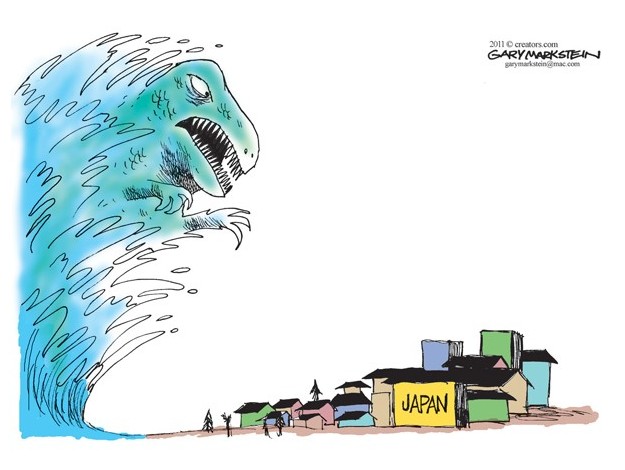
My prayers are with those affected by the tsunami this week. I view this image not as a mocking of this tragedy, but an analogy that mother nature can be a monster at times.