
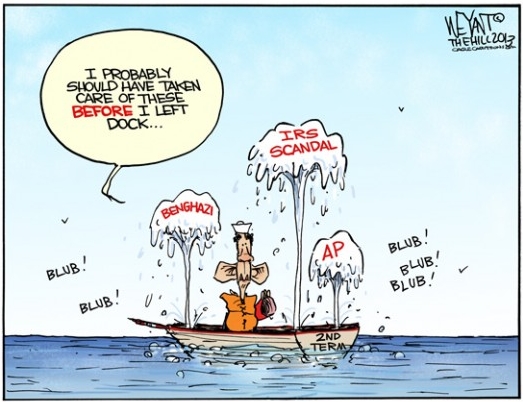
Just as one issue starts to be put behind us, it seems another comes to take its place. Unfortunate events, indeed.
Just as one issue starts to be put behind us, it seems another comes to take its place. Unfortunate events, indeed.
In Week 37, I shared how I planned to dump my Verizon land line and move to Comcast’s Voice service. So far, that’s not happened. So this week, it’s a Dear Comcast Letter –
Dear Comcast,
At first it seemed simple. I called and your sales guy told me $14 would get me Comcast Voice. I agreed, and a few days after, a technician came.
Nice guy, set up the VOIP modem, dial tone, but my phone number wasn’t ported from Verizon. I could dial out, but calls wouldn’t come in. He moved the wire back to the Verizon copper, spent some time with your customer service, and told me the issue was with my Verizon account.
It seems that a few weeks prior, I made a change to my account on line, and while Verizon ignored it, it put my account into a limbo status. So I spent the next hour with Verizon and they told me they would release the number within a few days.
I called Comcast back and awaited the next tech’s visit. The number still wasn’t released, and it was round two with both Verizon, and then Comcast. You told me to give it a week and then call your porting department to be sure the number was released and to set up another tech visit.
This is when the fun started. The porting department saw nothing, no order at all. Said I needed to talk to sales to set up the order. Sales is when it all went downhill. I told the gal I was looking to get the triple play (I already had Comcast TV and Internet) and that the first guy promised me it was $14 more than I paid now. Sales gal insisted I listed to a pitch for a security system, and told me to calm down. Rule number one for customer service – never say “calm down.” Never. She then told me phone would cost me $50 more than I paid now. As I started to tell her that I’m 2 visits and a half dozen calls into this, she abruptly tells me she’s transferring me to customer retention. Funny, I never said I was planning to leave, I was trying to get more service, and pay the price I was promised.
Another person answers and after letting me explain my situation, apologizes. He is a technician, and will transfer me. The final representative said the first salesman made a mistake, and instead of just adding phone also bumped up my TV selection. Somehow it took 15 minutes to figure this out. The actual triple play along with the adder for two cable cards for my TiVos will cost a total $12 more than I pay now. A bit less than I was expecting, but with far more aggravation than I’d ever imagine. The install was promised for this coming week. I figure it’s 50/50 whether this will be the end of it.
To be fair, when it’s going well, cable doesn’t bother me. There was a vocal minority that objected to data caps, a 250GB monthly limit. I think the most I ever hit in a month was 100GB. What’s remarkable is the confusion that occurs for what should be a simple issue. The good news is they are now going to waive the service call fee. The bad news is I was never expecting to pay a fee in the first place.
Have you ever had an ongoing issue with your phone or cable company? How did it end?
Edit – What are the odds? I wrote this article last night and today I get an online article from Advisor One – Top 10 Most Disliked U.S. Companies: 2013. Sure enough, Comcast was on the list. Funny though, so was American Airlines. They were my airline of choice and I a million miler with American. I’d say that in 30 years of flying, I had two issues that really caused me grief. Two issues in 30 years isn’t bad.
If you read enough different Personal Finance blogs, you find that there are a number of popular recurring themes. Ways to save on various purchases, how to plan for retirement, etc. The one that’s been haunting me lately is, as the title today says, saving vs paying off debt. There are some obvious choices to be made, such as paying down an 18% credit card or putting that money in the bank to earn .01% interest. (Uh, if it wasn’t obvious, pay the damned card!)
But, then there’s the grey area where the debate really has no conclusion, no right or wrong, just what’s right for you. First, a disclaimer. In the PF blogging community, it’s ok to disagree. Disagreeing isn’t a personal attack in this case, it’s just a different take on an issue. That said, It was two months ago that I read Are 401(k) and 529 Plans a Good Idea When You’re In Debt? I was part of the 78 comments that quickly went up after Joan Otto (Man Vs. Debt community manager) wrote this article in which she described how she’d prefer to go at her debt 100%, even to the point of sharing that she was sorry she or hubby even had their 401(k)s to begin with. She explained that they had a combined $44,000 in their retirement accounts averaging 8% return, but $59,000 in debt costing 14%. Ouch. I understand that’s an issue. The real issue that Joan shared was that their 401(k)s had no match. Game over. Really. Joan’s plan to pay off her debt with a vengeance was exactly the right thing to do.

What drew me in to the discussion was where Joan remarked that even if there were a match, she’d pass on it, and take The David‘s advice. If your employer is going to match the first few percent of your income dollar for dollar, my opinion is to take this free money. The match is usually up to the first 4-6% of income, which should leave enough funds so the debt repayment plan doesn’t suffer too much. Joan mentioned paying $2500 per month (wow!) toward the principal on her debt. That’s $30,000 per year. I don’t know their income, but even if we are looking at $100,000, I’d suggest steering the $6000 toward the match if there were one to be had. But that’s all hypothetical. Let’s move on to a real situation.
My ‘friend’ (ok, it’s a close relative. Let’s stick with friend for this delightful anecdote) mentioned that she’d qualify for a refinance of her mortgage once her credit cards were paid off. $10,000 at 18%, so the $400/month she was paying toward the cards would take nearly 32 months to pay off. She told me that she stopped depositing to her 401(k) and I thought about Joan’s story. My friend’s company had a match, 4%. This was $3000 left on the table. I looked at the numbers, and made an offer. I wrote her a check to pay off the cards, and she’d putting in $250/mo to the 401(k). Since it comes off the top, it’s $188 less in her take home pay. This leaves $212 to pay toward the $10,000. At the end of 32 months, she’ll still owe me $3,680, but her 401(k) will have $16,000 that wasn’t there before. Yes, the $16,000 is pretax, but she’s over 55, so if she changed jobs she can take it out with no penalty, just tax. At 25%, she’d still clear $12,000. I’m not forecasting any gain, in fact, she’s probably wise to keep this money in the short term bond fund for now, to know that it’s safe. And the refinance – once the cards show as paid on her credit report, the refi should save her another $200 per month.
There’s something admirable about killing the debt, I get that. I get that debt feels like a weight you just want to get rid of. But after nearly 30 years of matched 401(k) deposits, I see the power of compound growth on top of matching deposits. I see that I could have taken $200K over the years and paid off my mortgage by now, or I can have that $200K in debt and far more than twice that sitting in a retirement account. It’s tough to stay the course, especially when you look at how the S&P has crashed twice in the last 15 years. For most 401(k) accounts, I’d say to deposit to the match and that’s it, but walking away from that free money is a mistake, in my opinion. Keep in mind, most 401(k)s offer a low risk investment choice. Even though I might not choose it myself, it’s a good alternative to using the excuse of a ‘risky market’ to avoid saving altogether.
How have you handled the debt decision? Are you passing up a match in your retirement account?
This article was written by Gary Dek, a finance blogger who writes about making money, investing, budgeting, career and education planning, credit and debt, and real estate at Gajizmo.com. Gary previously worked for an internet company on their M&A team, as well as investment banking and private equity firms in California. He graduated USC with a degree in financial analysis, valuation and entrepreneurship.
The competition for college scholarships and grants is fierce and even students with excellent grades are no longer guaranteed to receive academic and need-based financial assistance for college. Student loans have never been easier to obtain, but they can mean starting out in adult life with crippling debt. Careful planning by parents can help students get their degree without financing all or even most of their tuition and other costs.
The cost of college tuition is rising at nearly twice the national rate of inflation. The average education costs at private colleges last year was $38,589, while resident students attending state colleges paid about $17,000 per year. Out of state students attending state institutions paid about $29,657 per year for tuition, and these figures do not include living expenses like dormitory fees or food. Books and supplies for college classes add a significant amount to tuition and other costs.
If you are looking for unique ways to fund your child’s college education, you should try making money from home or growing your side-business. The benefit of running your own business while sending your child to college is that you can decide how much of a salary to pay yourself each year, which can increase the amount of financial aid you receive. Since your income is treated differently than your assets (the value of your business, so be conservative with your estimate), a lower income with higher unrealized asset gains can make college more affordable for your family. Otherwise, if owning a business is not an option, stick to these traditional ways of saving and investing money for college.
529 Custodial Accounts
A 529 account is owned by the parent with the child as beneficiary. The money in these accounts can only be used for educational expenses so it is important to start the account with a target figure in mind. Withdrawing funds for non-educational expenses costs a stiff 10% penalty, but the beneficiary on the account can be changed to another child or relative if there is extra money in the account, or if the child opts not to attend college. Additionally, investment gains in the account are tax-free, allowing your money to grow uninterrupted by capital gains or income taxes.
Since there is a penalty for withdrawal of funds for non-educational purposes, it is best not to over-invest in a 529 account, but other investments can be used to complement this savings plan and ensure there is enough money to cover a child’s educational expenses.
Life Insurance
There are several types of life insurance policies that accrue cash value over the years. An endowment policy, purchased in infancy will usually mature in 20 years and pay out a cash payment stated in the policy. Whole life insurance offers the option of taking out interest free loans of up to 90% of the cash value, with no repayment schedule, while keeping the policy in force. These policies also allow young people to have the lowest life insurance premiums for life since whole life is a permanent type of coverage. No income tax is due on loans taken on permanent policies.
People with a slightly higher tolerance for risk may choose a universal life insurance policy. While whole life insurance is invested conservatively and offers a guaranteed rate of interest, similar to other short term investment options, universal life policies utilize riskier investments like stocks and bonds and may yield a higher rate of return over time. Life policies can be set up so beneficiaries receive the face value of the policy minus loans if you should die or the face value plus any remaining equity.
The premiums on permanent policies are considerably higher than those of term life policies so it is best to use these policies as an alternative investment vehicle. Instead of buying all your life insurance in a permanent policy, supplement permanent coverage with cheaper term protection.
Fixed Annuities
A fixed annuity can be a way to save for college tuition if you will be at least 59½ years old while your child is attending college, since penalties for early withdrawal no longer apply. Otherwise, fixed annuities are retirement accounts that have high penalties for early withdrawal. While they are not the best and most recommended way to save for your children’s college, they do have tax advantages over other types of retirement savings. The money invested in fixed annuities and any returns earned on these funds cannot be considered as assets by lenders offering government approved student loans. This means you can keep your retirement funds while qualifying for federal financial aid, including grants and very cheap or subsidized loans.
Nevertheless, sending your child to college should not jeopardize your retirement so it is best to use this type of investment as a retirement account rather than saving for college, unless the two coincide. After all, when you pass 59 ½ and are not within the surrender period of 5 to 7 years after issuance, the annuity begins to pay out an income stream. With that income stream, you are free to do as you please.
Roth IRAs and 401(k)s
Roth accounts differ from traditional retirement savings plans because contributions to Roth accounts are not tax deductible. Income tax is paid on the money before it is put into savings. While the contributions are not tax deductible, you can withdraw contributions, for any reason, without paying a penalty since the money has already been taxed. There is a 10% early withdrawal penalty on investment returns, but this does not apply if the money is withdrawn for qualified educational purposes, including tuition payments. If the returns on your contributions are equal to or greater than the total contributions to your account, you may have to pay a penalty if you withdraw the earnings that exceed the amount of your contribution. Beyond that, Roth IRAs and retirement accounts can be a legitimate source of money for education costs.
Treasury Bonds
Treasury Bonds can be an excellent savings vehicle for those who are financially conservative. At one time, it was commonplace for grandparents and relatives to give U.S. Savings Bonds as gifts to newborn infants so they would begin their adult lives with a nest egg. Unless you need supplies for your new baby, suggest the gift of a Treasury Bond to those who ask what you need. They are available in denominations that cost less than a new stroller or crib and they take years to mature. When your child is ready for college, the treasury bonds given as baby gifts can help pay a significant portion of your child’s schooling expenses.
Final Word
The average income of a person with a college degree is more than a million dollars higher over a lifetime than the income of a person with a high school diploma. Higher education is necessary for the financial success of your child when he or she reaches adulthood and pursues a career. The average cost of a four year college degree is expected to rise to over $100,000 by the year 2016. The best way to ensure the success of your child is to begin a savings plan at their birth. Professional financial advisors can help parents find and execute the best ways to save and invest for the future of their children.
Check out www.Gajizmo.com to find more of Gary’s writing.
At Bargaineering, Miranda offered her take on Proposed Retirement Cap: More People Could Be Affected Down the Road. Interesting times ahead, my bet is that this legislation isn’t going to pass. Not without some major edits to the current proposal.
Stephanie at The Empowered Dollar shared How I’ll Retire Rich After Only 3 Years of Saving. At 25, Stephanie has already saved $40,000, a nice start. By age 60, it should be worth over $300,000, not too shabby, but not quite rich. Hopefully she’ll not call it quits so soon, she’s has too many years until retirement to stop saving.
Adjustable Rate Mortgages are Not Evil, or so Brock thinks. He posted some compelling reasons at Clever Dude, and won me over. It’s important to make a distinction between the interest-only teaser rate ARM, and the normal ARM whose adjustments aren’t going to double your payment. As I commented – A $400K 1% interest-only is $333/mo. Cool, huh? Now, adjust it to 4%/30 year, and it’s $1910/mo. These are the ARMs I’d avoid at all cost.
At Financial Finesse Blog, Eric Carter asked (and answered) Does the 401(k) “Suck?†This topic has been getting a lot of press, more bad than good, lately. Eric offers a balance view, and some great reasons to stand by your 401(k).
How Well Will Your Retirement Expectations Match Reality? A great discussion at Sound Mind Investing. I learned that few than half of 55 year olds have saved more than $50,000. A bit scary, that statistic.
And we’ll wrap this week up with Fixing an IRA With the “Wrong†Beneficiary, excellent info if you inherit an IRA but felt that siblings were left out.
This week’s title? A once in a lifetime event this week. At 1:12:03 5/8/13 the click/date showed the Fibonacci series. Math geeks everywhere paused for a moment of silence.