I was hoping for an appropriate political cartoon to share regarding the Apple fiasco from this past week. I was counting on a scene titled “The Big Apple Circus” and the Senators who grilled Tim Cook would be illustrated as clowns asking rhetorical questions about the tax code. Instead I’ll be happy with a Star Trek reference to acknowledge the latest film to hit the big screen.
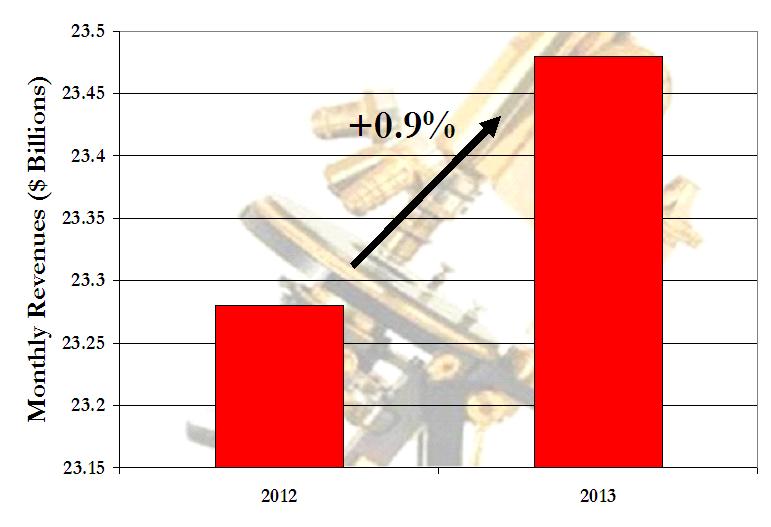
You ever have something pointed out to you, something you never noticed before, and then you see it every place? When I wrote Lying With Charts, I offered one of the most manipulated charts I had come across in some time. There are also many that aren’t manipulated, but are still not quite up to “telling it like it is,” with how they are constructed. First, a disclaimer. I love Forbes Magazine. The articles are top notch, well written, well researched, and when opinion is offered, even when you disagree, you find a strong case made by the writer. The following chart was included in the article March Semiconductor Sales Up Again, and I suspect that the chart is constructed from the numbers, but not by the author of the article itself.

At first glance, the number is up huge. 2-1/2 units to 6-1/2. Not quite, the year on year increase was just under 1%. For all intents and purposes, the chart simply indicates “up.” To be fair, a graphic with two points is tough to construct, especially when changes are so slight. And as I noted, the content and insight of the author’s writing will prompt me to continue reading and just ignore these charts. I think I’ve made my point, and wasn’t planning to turn this into a regular series. Before moving on, though, I’ll offer one more image.

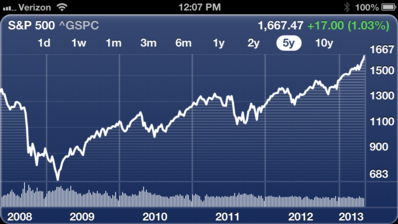
When I look at my iPhone for a chart, it naturally scales it, using the value from the lowest point in the time period as the low x-axis choice. Which, when you think about this, actually would multiply the effect of the distortion of the Forbes graphic above as the the 2012 value would be at the bottom of the chart. In the end, I hope these two articles helped you understand a bit on how to interpret these charts, at the very least, give them more than a brief glance, and understand the data being presented.
There are times that truth to me is stranger than fiction. Earlier today, I saw Tim Cook questioned by multiple senators regarding the US taxes Apple pays. A brief disclaimer, I happen to be an Apple fan, but I’d feel no different if the CEO of any other large company were called to testify. And I don’t have too much respect for our politicians, a few minutes at a time is all I can listen to them. Fortunately, there’s TiVo and it pause button.
It seems that it just occurred to our esteemed Senators that companies like Apple don’t pay US tax on earnings that were not not realized in the US. In the complex structure of the world economy, any company with major sales and manufacturing overseas will structure itself in a way that maximizes its returns to shareholders. That would stand to reason. It would also make sense that when there’s manufacturing in China and sales in Asia, that Apple is already paying the taxes due in that region of the world.

From the brief bits that CNBC aired, I caught one Senator asking Tim Cook who his biggest competitor was. Samsung. He was then asked if Samsung was a US company. At that point I was trying to figure out if these questions were meant to be rhetorical or if these guys actually didn’t know that Samsung is a Korean based company. They went on to discuss how Apple’s overall tax burden, worldwide, was a similar percent to what Samsung would pay. (It is.) The real issue comes down to repatriating dollars into the US that were earned and taxed overseas. It’s actually cheaper for Apple to borrow money in the US by floating bonds with interest they can deduct as an expense instead of bringing those overseas dollars here.
Sen Rand Paul spoke up and articulated just what I was thinking –
I am offended by the tone and tenor of this hearing. I am offended by a $4 trillion government bullying, berating and badgering one of America’s greatest success stories.
Tell me one of these politicians up here that doesn’t minimize their taxes. Tell me a chief financial officer that you would hire if he didn’t try to minimize your taxes legally. Tell me what Apple has done that is illegal. I am offended by a government that uses the IRS to bully groups such as the Tea Party but I am also offended by a government that convenes a hearing to bully one of American’s success stories.
I am offended by the spectacle of dragging in here executives from an American company that is not doing anything illegal. If anyone should be on trial here, it should be Congress.
I frankly think the Committee should apologize to Apple. I frankly think Congress should be on trial here for creating a bizarre and byzantine tax code that runs into the tens of thousands of pages, for creating a tax code that simply doesn’t compete with the rest of the world.
Yes, it’s Congress that writes the tax code, the IRS just enforces it. It’s Congress that needs to work to change the laws to encourage growth, not encourage loopholes that avoid tax but aren’t helping to create jobs. I’d propose that Congress pull their collective heads out of the….. sand, and make a few simple changes that would get things started. Dividends are taxed. Apple drops $100M in dividend payments to US shareholders and much of it will taxed, to the extent it’s not held in tax deferred accounts. A simple new law that permits repatriation of funds to pay dividends would be a great start. Next, how about allowing that money to used for any job creating expansion? Instead of berating an American success story, why not ask Mr. Cook what exactly would induce him to build new manufacturing facilities in the US, and listen closely to his answer?
Stranger than fiction is when a presidential candidate refuses to explain the origins of the $100M in his IRA, the Senate is complacent. But when they realize that a $100B company exercises the same care with its finances to minimize its taxes, there’s a hearing. Shame on all of you. Well, except Rand Paul, of course. I plan to watch the entire hearing archived on CSPAN, and will write more on this topic if I uncover anything interesting.
A guest Post from Tim Aldiss –
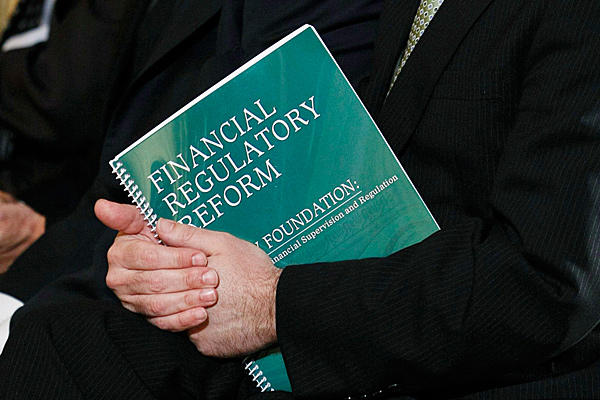
Financial regulations are always put in place with the intention of lending further transparency to decision making processes. However, the eventual results do not always mirror the initial vision. Although providing a new breed of qualified investment advice may help investors avoid financial pitfalls, many individuals are now distancing themselves from this prepaid and often times still confusing arena. The end result has been that markedly fewer people are seeking the services of a financial adviser; indeed, less than one-third of all adults will consult these professionals.
Although some analysts will state that a reduction in the number of professional advisers is one of the goals of many regulatory authorities, others will feel that the do-it-yourself tendency being witnessed may usher in dire consequences for those inexperienced in the financial industry. Is this a future financial debacle waiting to unfold?
Another effect that this shift has had is in the way financial companies now communicate with potential clients. Unsurprisingly, many professionals are now learning to embrace the internet as a means to drive business forward and to disseminate their services. It seems that online execution-only platforms may be the way forward. In fact, the investment giant Hargreaves Lansdown now boasts a website that attracts more visitors in the United Kingdom than The Times or the Post Office. They have also adopted an iPad version of their newsletter and cater to thousands of Twitter followers each month.
Additionally, it should come as no surprise that garnering investment advice from social media sites has also increased in popularity in recent times. Many of those who follow the do-it-yourself mentality will utilize the knowledge base of the larger, interactive populace to help shape their financial decisions. Although this methodology is still in its infancy, some feel that the purchase of equities and deciding upon the correct investment fund may be the next logical step forward in the social media arena.
It is obvious that financial companies and fund managers need to quickly adapt to a generation increasingly focused on mobile devices, business apps and real-time flexibility. No longer does this approach represent but a small portion of investors; rather this will be considered the norm in the relatively near future.
So, while the landscape of financial advice may be changing dramatically, the ability to acquire sound and secure advice is more important than ever before. While companies continue to modify their practices to accommodate this growing trend, individuals need to avoid the pitfalls often times associated with such a malleable environment.
Tim Aldiss writes on behalf of Four Broadgate, the financial services PR experts.
Let’s start this week with My Retirement Blog’s U.S Retirement System a Success. To be fair, Andy doesn’t quite agree with the title, but was referencing a paper put out by the Investment Company Institute (ICI). I’ll be reading the paper and writing my own take on it later this week.
Now that she’s finished her Walk For Hunger (congrats for passing $2000 raised, and your team for $5,000+!!) Stephanie is asking herself, “Was my Traditional to Roth IRA conversion a mistake?” You see, she did fine projecting her tax bracket, but the extra income negated her ability to deduct her student loan interest. If it’s any consolation, Steph, the market is up nearly 17% year to date, so you may have already broken even or are ahead of the game despite that small faux pas. If it still bothers you, you have until October 15th to recharacterize that conversion and amend your return, but hopefully you caught much of the market increase this year and are happy with the decision to stay in the Roth. Check out her site Graduated Learning: Life after College.

At Five Cent Nickel, I found out that Overdraft fees soared to $32 billion in 2012. WTF? (This is a family friendly site, WTF = “what the factorial?”) You can do the math here, this is $100 for every last person in the US. And probably $300+ given that at least half of us must be more responsible than that. The take-away here? Balance your checkbook. Now.
At Lazy Man and Money, a guest post by Kosmo – Saving Money At The Store. One day you will make enough that you might be able to waste money without a second thought. Few people are there right now, so these ‘frugal’ articles are always welcome reading to me. From this article, one gem of a line – “If you’re paying $3.60 per gallon for gas and get 18 mpg, you’re burning 20 cents worth of gas each mile you drive.” Which is why planning your grocery store trips is a great first step in your path to saving.
At Monevator, The Investor tells us why he’s “Thinking of Hetty Green as I dial back on shares.” I have to admit, I’ve been thinking about this as well. As we went through the 2008-09 crash, we hung in and bought into the market. It’s pretty cool to see a net worth 2-1/2 times as great as it was in 2009 just over 4 years ago. But it would also be ok to take a bit off the table so if and when the market starts to get frothy, I’m not the last one hanging in there.
Let’s close this week with the question If you had be selfish and spend $5,000 by the end of today, what would you buy? This was asked at Punch Debt in The Face, and it got 60 answers pretty fast. I haven’t responded yet, gotta think on this one.