≡ Menu

Commonly Asked Credit Score Questions

We all know what a credit score is this day in age. It follows us around our entire lives and is used for the purpose of judging the amount of risk we impose on lenders that decide to loan us money. With so much lending capital and, the desire for bigger and better that we’ve always had, your credit score is more important today than ever before. Of course, as with anything that is important to consumers, credit scores have generated quite the conversation and several questions. Here are the answers to some of the most commonly asked credit score questions.

Is It Possible To Build My Credit Score Faster Than A Year?

The truth is, I would love to tell you that it’s possible but, in that case, I would be lying to you. When we think about the importance of credit scores and what they portray, it’s simple to understand why it can take a year or longer to build your scores. Imaging being the lender that is issuing you a loan. Think about what it would take for you to give some person you don’t know hundreds or even thousands of dollars on a promise of a small profit. You would want to know that this person has paid their loans on time in the past. At least for the last year, if not two! The simple fact is, only consistency in payments alleviate risks imposed on lenders. The only way to show consistency in your payment habits is to show that you are capable of making payments over a long period of time!
creditscore

How Accurate Are Most Credit Reports?

If you watch T.V., listen to the radio, read the newspaper or magazines, chances are, you’ve seen some ad for a credit protection service that claims that many credit reports are inaccurate. So, exactly how accurate are most credit reports and, should you be concerned about yours? The truth is, most credit reports are incredibly accurate. If they weren’t well, they just wouldn’t be credible! With that said, the ads you’ve read about, seen and heard aren’t lying either. Everyone has a credit report, with that said, there are bound to be some mistakes! You should always keep tabs on your report. You can do so for free at www.annualcreditreport.com!

Why Will Closing A Credit Card Account Damage My Credit Score?

If you talk to most financial professionals about closing a credit card, you will find out that it will most likely damage your credit score to do. That said, this has spread through the masses and the common thought is that no matter the case, closing a credit card will always harm your credit score. That’s not exactly the truth either. When it comes down to it, one of the factors included in the calculation of your credit score is the amount of time your accounts have been opened on average. The longer the average, the better. Therefore, if you do close a credit card that you have had for a long time, chances are, it may harm your credit score. However, let’s say you just opened a store credit card to get a bit of savings at the register. You earn the savings and now, you will never want to use the card again. This new card reduces the average amount of time that your accounts have been opened. Therefore, by closing this account, you will increase your average back to where it was and you will probably notice a positive change.

Final Thoughts

I hope that you’ve enjoyed my article. More importantly, I hope that I’ve given you the answers you’ve been looking for! If you have any other questions about credit scores, please feel free to ask them by leaving a comment below. I will respond, I promise!

About The Author – Joshua Rodriguez – This article was written by Joshua Rodriguez, proud owner of CNA Finance and avid personal finance journalist! Join the conversation about credit scores or any topic of your choice on Google+!

{ 1 comment }

A Financial Fear Roundup

Donna Friedman was taken a bit aback by some dialogue on a recent web chat, and turned her thoughts into Cards and consequences, a great discussion of when to introduce the concept of credit cards to your kids. I’ll give you a hint – if you wait till the kid’s off to college, you might be a little lot too late.

At The Wisdom Journal, Ron asked (and answered) Should You Invest While You’re In Debt? I have to say, this was on my short list of topics I planned as upcoming posts of my own. The issue is complex, and Ron addresses a number of aspects in the pay vs save decision. Me, I tend toward the boring spreadsheet approach, numbers that make your eyes glaze over. Ron avoids the risk of putting the reader to sleep, a nice piece.

scream

A new blog to the roundup, Our Taxing Times, wrote a clever post on Do Overs, not quite the do over that I love in the Roth recharacterization, but the 1040X do over, the amended tax return. This do over comes with a three year limit, so you just missed the chance to update your 2009 return. Check out the full article, and tell Trish I made the introduction.

My 13-Year-Old Daughter Shares Her Financial Fears is Nina Penzo’s guest post at her dad, Len’s, site. This young woman has some important matters on her mind. Part of me hopes she’d just be a kid a while longer, but the stronger feeling is that she’s so far ahead of other kids, and many adults, that she’s getting a great start in life. Congrats, Len, it’s you and your wife who will have one less concern on your minds, not to mention a daughter to be proud of.

At The Financial Finesse Blog a clever Can Dr. Seuss Help Us With Financial Literacy Too? Some classic works of the master children’s book author are quoted and applied to finance.

And last, a recurring topic - Should you pay off your mortgage? This is one that’s always going to be out there, every financial author has either written about it or will soon. Check out Nick’s spin on it at Pretired.org, and see if you agree.

{ 1 comment }

One False Tweet

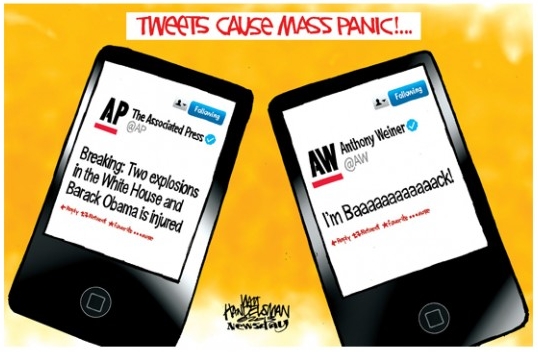
falsetweetOne fake tweet from the AP twitter account and there was a moment of panic with the S&P dropped over 10 points. All was back to normal a few minutes later when it was discovered to be a hoax.

{ 0 comments }

Frugal Friday Week 38

It’s been nearly four years since I wrote about the CARD Act of 2009. One part of this ‘consumer protection’ law permitted merchants to charge an adder for a purchase made with a credit card. Fortunately, I live in a state that has its own rules, and an adder isn’t permitted.

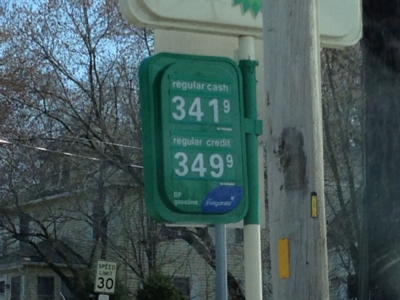
gascredit

As you can see, however, rules are meant to be manipulated, if not ignored. You see, the distinction between the cash and credit cost for gas isn’t an adder for credit, it’s a discount for cash. Got that? My Amex card happens to offer a cash rebate of 3% or 10.5 cents on the credit price above, vs the 8 cent discount for cash. 2-1/2 cents per gallon rebate wont make me rich, but at $50 a tank of gas, it’s a convenience I’d rather not give us, so long as it’s not a cost to me. Push that discount to 11 cents, and I’ll start carrying a few $50s.

Are you starting to see more gas stations offer a cash discount? Any stores starting to charge extra to use your card?

{ 0 comments }
A guest post today from Andrea Woroch –
Budgets, investing and other methods of personal finance are at the forefront this April in honor of National Financial Literacy Month. Smart spending is another essential part of financial literacy, yet many of us continue to make blunders in pursuit of things we want or need.
Online shopping can compound these mistakes since a few clicks is all it takes to complete your desired purchase. What’s more, many eRetailers are using a marketing method called Dynamic Pricing to maximize profits which may be costing you more. For example, Amazon changed the price of a microwave oven nine times in one day, making a sucker out of whoever purchased it at the peak price. Being aware of this tactic gives you an advantage when finding the best times to shop, but there is still a lot more to this marketing and sales tactic to be aware of.  Happily, the following e-commerce trends actually help you make better buying decisions online and will improve your eShopping IQ.
1. Monthly Product Subscriptions
Despite the appeal of shiny new things, there are some daily necessities we all hate to buy and often forget to restock before it’s too late. Leaving us to a limited selection of pricey choices at the closest convenience store for those items like toilet paper, razors and pet food. Monthly product subscriptions are a great solution to maintaining necessities in stock while keeping costs down. Take the Dollar Shave Club, this inexpensive monthly subscription offers you replacement razor cartridges for just $1 every month. RollDelivered.com keeps your toilet paper in stock for $8.99 per month while online pet stores like PetCo.com offer free shipping with additional savings of five percent on repeat deliveries of pet food.
2. Specialized Comparison Sites
Speaking of items we hate to buy, is there any purchase more irritating than ink cartridges? With markups exceeding 2,000 percent in some cases, buying replacement cartridges is about as much fun as getting a root canal. Enter InkjetWilly.com, a very specific comparative marketplace helping shoppers find the best price on printer ink. This comparison search engine even offers a coupon code for 10 percent savings at the sites it recommends for buying ink. We’ll likely see more of these specialized sites as consumers become more informed about product markups through dynamic pricing strategies and turn to the Internet for savings.
3. Tracking Tools
The Internet makes comparing prices much more accessible than it used to be. Unfortunately, the process can sometimes be overwhelming with all the products, reviews and websites available. That’s where browser add-ons like Hukkster come in, helping you nab a good deal without much effort. When you find something you like, “hukk” it and you’ll get an email notification when it drops in price or when the store is offering a sale. Similarly, Yapta alerts you when a desired travel itinerary is offered at its best price, and when airfare you’ve already purchased drops in price.
4. Site-to-Store
Free shipping isn’t as prominent as we’d like since many stores require a minimum purchase. So you may end up forking over an extra $8 to $12 to receive your online purchase. Luckily, big retailers like Target and Walmart offer site-to-store shipping options on several products, waiving shipping fees and sometimes enabling you to get your purchase faster. You may roll your eyes at the notion of driving to the store to get something you want delivered to your door, but you have to evaluate how much that perk costs you in the long run. Avoid shipping costs and get your item faster? No-brainer.
5. Peer-to-Peer Shopping
Ever coveted the clothes in your friend’s closet or wished you could shop the boudoir of a celebrity? Though Rihanna has yet to offer her personal style for sale to the masses, you can shop the closets of fashionistas across the country with Poshmark. Think of it as a combination of Pinterest and an online consignment store. Simply browse photos of items and chat with sellers directly to complete the sale. You can also create a profile and sell clothes from your collection, though Poshmark does take 20-percent commission.
Andrea Woroch is a nationally-recognized consumer and money-saving expert who shares smart spending tips and personal finance advice to help transform everyday consumers into savvy shoppers. A sought after media source, she has been featured among top news outlets such as Good Morning America, NBC’s Today, Dr. OZ, New York Times, Kiplinger Personal Finance, CNNMoney and many more. Andrea is a dedicated smart money blogger with stories posted on popular lifestyle and personal finance sites and writes for the New York Daily News Dollar Stretcher as well. You can follow her on Twitter for daily savings advice and tips.
{ 2 comments }