≡ Menu

A Jacked Signature Roundup

At Neal Frankle’s Wealth Pilgrim a great article Should You Contribute to a 401k or Not? Nothing is perfect, the 401(k) being no exception. Neal offers a numbers of pros and cons to help you decide if this account is right for you.

Next, at Retire by 40, some advice on How to Start Contributing to a Roth IRA. The Roth offers a unique opportunity, the flip side of the Tradition IRA or 401(k), providing no tax deduction on deposit, but no tax due at the time of withdrawal.

At Budgets are Sexy, J Money asked My New Refinancing Idea: Brilliant or Stupid? A bit convoluted, but J is a bit underwater on his house and strategizing on how to refinance and lower his mortgage rate. J is in the classic middle, high rate, under water, yet too ethical to walk away. Too bad the banks can’t find a way to help people like this, it would be the right thing to do, in both senses.

jacklew

Miranda guest posted at Bargaineering sharing with readers What’s Next for the AMT. The AMT permanent fix was a long time coming, and in this article, Miranda shares the details.

Set aside extra time, you’ll want to read every word of Peter’s post at Bible Money Matters, How To Save Money On Just About All Of Your Regular Monthly Bills. Use just a few of Pete’s suggestions, and the savings will add up fast.

We’ll close this week with a Shocking Tax Fact: Claim This One Tax Credit and The IRS Will Almost Certainly Audit You. I’m not one for spoilers, but I’ll share that it’s not an uncommon credit, in fact, I’ve written about it on occasion. Yes, I was shocked to read this.

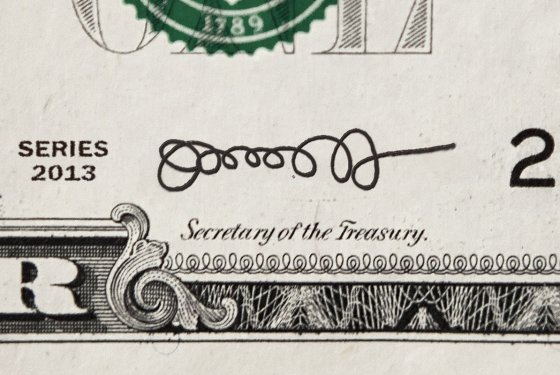
Above image is the signature our currency will soon have if Jack Lew doesn’t take a quick penmanship lesson.

{ 0 comments }

Next Issues In Washington

theissues

The Fiscal Cliff behind us, and the Debt Ceiling is right ahead. The next crisis…..

{ 0 comments }

Qualified Charitable Distributions

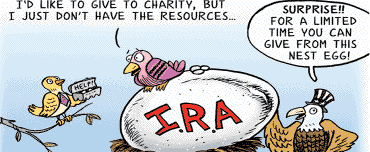
Two years ago, I wrote about donating your IRA RMD (The required minimum distribution you must take from your traditional IRA if you are over 70-1/2). This effectively gave people who were charitable, had to take RMDs, and for the most part, weren’t itemizing their deductions. Congress dragged its feet on this rule for 2012 up until after the New Year, and the IRS has published the rules for those who wish to take advantage of this in 2012.

To take advantage of the QCD (Qualified Charitable Distributions) for 2012 is a bit tricky. If you took your RMD in December, 2012, you can donate any or all of it (up to $100K per person) to a charity and have it count as a 2012 QCD.

If you wish, you can make your 2012 QCD by having your IRA distribution paid directly to the charity. But note, if you wish to make a 2013 QCD, you must wait until after January.

Note also – If you forgot to take your RMD for 2012, this is a pretty cool way to avoid paying Uncle Sam a penalty, and letting your favorite charity be the richer. Recall, a missed RMD comes with a 50% penalty, so between the tax and penalty, you may have as little as 15% left. Time to help that local Vet’s Shelter.

I’ve offered a quick overview of this rule, if you wish to read more, Charitable Donations from IRAs for 2012 and 2013 is the link to the IRS press release.

{ 0 comments }

11 Win-Win Business Negotiation Tactics

Today, a guest post from Jon Tucker –

Business deals offer excellent opportunities to increase revenue and reduce risks for both parties. Contracts start out as a list of basic requirements without the legal jargons that are written into the document later. Both parties come to the table with basic ideas about the final deal. As such, the side with a refined negotiation strategy receives better terms from each session. The one with great negotiating skills makes the other party to believe that the entire situation offers a win-win result for all the parties involved.

But if you feel that you need to have a sound arrangement in place that actually is a win-win proposition for parties involved, there is more than one strategy to choose from. The following list of 11 tactics may help in guiding the contract negotiation meetings to a beneficial close. Let’s discuss them in detail.

1.Create manageable segments
Each part of a contract should be discussed to prevent an “all or nothing” approach to the contract. Agreement should be reached on each segment to allow the parties to determine which terms make the most sense. Logical pieces of the contract are formed as the list of requests is reviewed and discussed. Difficult portions should be negotiated early to evaluate the probability that a deal can be created.

2. “Asking for what’s fair”
Certain requests may seem unreasonable when mentioned for the first time at the negotiating table. The requesting party should use a friendly tone and state something like; “I am only asking for what’s fair.” This line allows the other party to evaluate the request.

3. Resolve issues beforehand
Contract negotiations can lead to arguments about semantics if both sides are not focused on resolving each issue. Adopt a problem solving approach rather than rejecting each other’s ideas and suggestions. Problem solving will neutralize conflicts as each party will look at the possible alternatives with a logical perspective.

winwin

4. Take control
Advantages can be created when one party offers to host the meetings. Time, agenda and pace offer the framework necessary to move forward on one party’s terms. The party who takes this initiative will have more leverage. But the other party can also decide to take turns in hosting business meetings and progress accordingly.

5. Set priorities
Prior to each meeting, the parties should know what parts of the contract are mainly going to be discussed. This way, not so important parts of the contract will not consume time and energy meant to focus on really important issues.

6. Offer concessions
Both sides should know which contract terms can be offered in exchange for higher priorities. A contract detail that the other party wants can be used to leverage to win a higher priority at a later date. Such exchanges between parties about actual contract points will allow them to make progress during every meeting.

7. Ask questions
Effective negotiations are lively conversations where information is exchanged in an open discussion. Questions that spark more dialogue will create a positive tone. Both sides will learn more about the partner if questions are asked about facts surrounding the contract negotiations. Therefore, it is in the best interest of the parties to listen carefully to each other and assess various business options.

8. Acknowledge agreement
True statements from the other party should draw verbal agreement throughout the discussions. Positive comments prevent escalating emotions when one party does not feel involved in the conversation. Each meeting should end on a positive statement about the progress made.

9. Know the details
Prior to the next meeting, the parties should conduct substantial research to support the negotiations that are scheduled to take place. Information about the other party can be helpful in finding negotiating positions that will remove barriers to agreement.

10. Handle ultimatums
Deal ending statements should be anticipated. One tactic used in negotiations is to drop an ultimatum in the midst of a meeting to see how the other party responds. Immediate responses can cause the contract to fall apart or be signed. The party on the receiving end of the ultimatum must remain aware of this strategy and be prepared.

11. Avoid feelings
Business contracts can offer a lifeline to a struggling business at a crucial point in time. Honest negotiations should include open dialogue without playing on the other person’s situation. Emotions should be removed from the situation and every decision should be made objectively after taking into account facts.

To conclude, win-win business negotiation tactics build bridges that can strengthen a business operation. Bankers, attorneys, accountants and other professionals play important roles in finalizing deals that will stand up in court. Regular meetings with each professional will prevent problems from stalling the negotiations with another party. Where large contracts require more negotiating time, small agreements dictate the same steps taken in larger segments to save time.

Jon Tucker is Director of ENotaryClasses.com, the leading provider of notary classes required by the State of California to become a notary public.
{ 6 comments }

A 2013 New Year roundup

Last weekend’s Fiscal Cliff Roundup preempted a planned New Year Roundup, so let’s get to it before the Ides of January has passed.

Kelly at The Centsable Life wrote Resolute in 2013, dividing her goals amongst Family, Money, Life, and Work. I think that’s a great approach, lest we forget what a balanced life is all about.

At How I Save Money.net Lulu posted her To Do List For 2013. A nice mix from the different life groups. Goals included Money, Relationships, Self-Improvement, and Prayer. Lulu wrote, “I want to work my way up to being able to run a little bit because I am tired of seeing the other people in the gym running next to me on the treadmills.” I’ll offer her some advice. Walk. Walk until you can go well over an hour, and pick up your pace. At some point, just jog a bit. Even alternating a one minute jog, and five minutes of walking, will eventually turn into five minutes jogging, then ten, and before you know it, you’re running an hour at a time. Just stick with it.

One Frugal Girl offered not a resolution but a single goal, the Serenity Prayer – God, grant me the serenity to accept the things I cannot change, The courage to change the things I can, And the wisdom to know the difference. – Personal goals are just that, personal, and the achievement of this wish seems great to me.

Divya, posting at Nerd Wallet, offered New Year, New You: Financial Literacy Workshops, a list which covers locations from the four corners of our country, maybe you’ll attend one near you.

At Personal Dividends, Miranda Marquit asks (and answers) Why Is Making Resolutions So Important in Our Culture? She doesn’t offer her own this year, but shares some greats thought on how to formulate your own goals.As always, some great insight from Miranda.

Hank Coleman offered his New Year’s Resolutions That Will Save You A Ton Of Money. Eight specific things you might target. Me, I can ignore the “Quit Smoking,” a gross habit I never picked up. Check out Hank’s list and see which ideas you might use for your own goals.

And to wrap up this week, Mighty Bargain Hunter’s John Wedding wrote Our personal finance plan for 2013 and beyond, a look back at his family’s struggles in 2012.

If you visit and comment on any new-to-you blogs, tell them Joe sent you!

{ 2 comments }